Tell us about the job
Takes about a minute. No obligation.
A contractor quoting a water heater replacement in Benton County starts at the service panel, not the closet. Electricity heats more occupied homes in Benton County, Washington than any other fuel, at 78.3% (2020-2024 ACS 5-year). With electricity powering the vast majority of homes here, the existing panel and its available circuits determine what a new unit can draw and at what capacity. A water heater that is undersized for the household or wired to an overloaded circuit will cycle harder and recover more slowly, wearing the heating elements faster. The electrical supply is part of the install scope, and a contractor prices it that way.
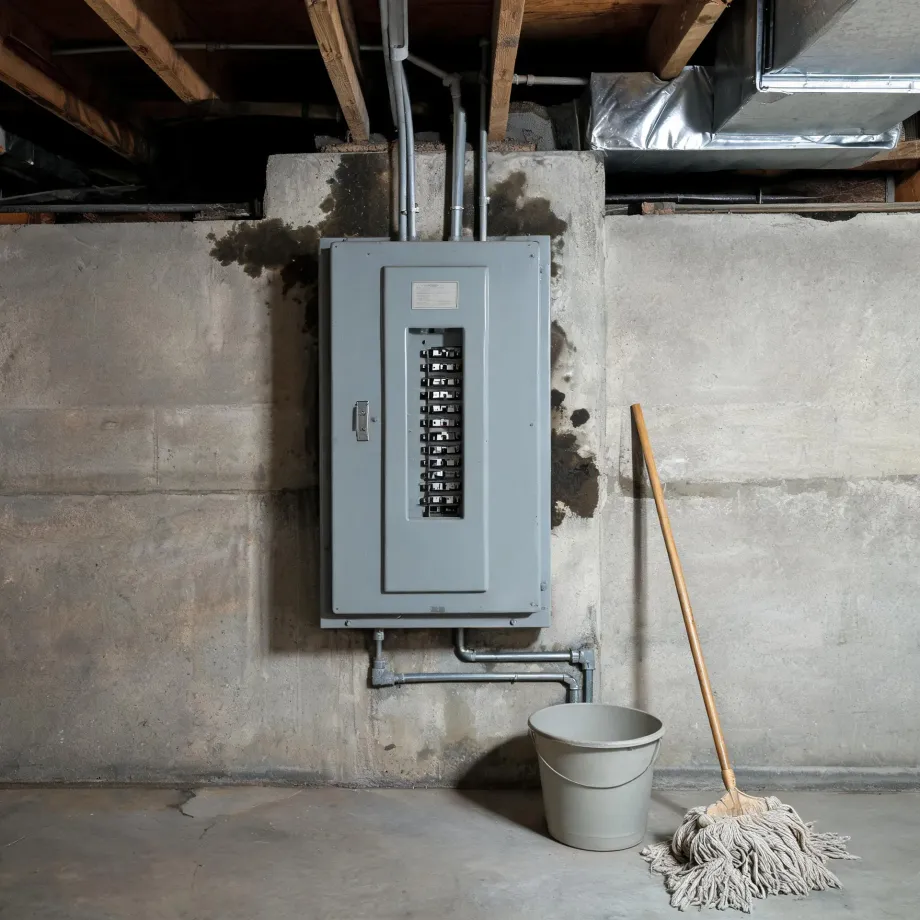
Existing ductwork and electrical service are what a contractor prices first in Benton County, and the age of the housing stock is why. Half the homes in Benton County, Washington were built in 1988 or earlier (2020-2024 ACS 5-year). A house built to those specifications was wired and plumbed around equipment that has long since been replaced, and the infrastructure left behind reflects those original loads. A new water heater may draw differently than what the house was set up to carry, and the answer to that question lives in the walls and the panel, not in the equipment catalog.
What a Water Heater Installation Covers
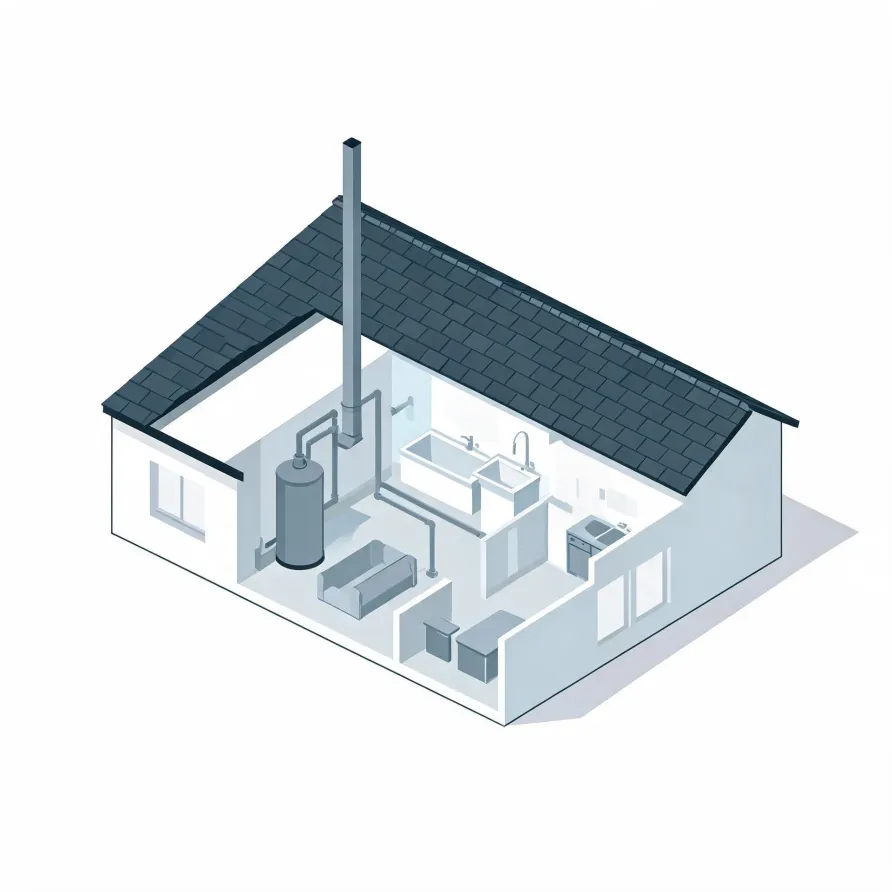
The water heater tank itself sits in a utility area, basement, or closet and holds the water that gets heated and sent through the house. On a standard tank unit, the burner assembly or heating element sits at the base or inside the tank, and the pressure relief valve mounts on the side as a safety device.
The cold water inlet and hot water outlet pipes connect at the top of the tank, routing supply in and heated water out to every fixture. A drain valve sits near the base, and the anode rod runs inside the tank to slow corrosion. The flue or exhaust vent, on gas units, exits through the top and runs to the outside.
The drawing shows a typical layout, and a licensed contractor determines exactly what applies to your home and its existing setup.
Find a contractor in Benton CountyBenton County, by the numbers
44 severe weather events were recorded in Benton County, Washington between 2015 and 2024.
NOAA National Centers for Environmental Information, Storm Events Database, bulk CSV export, events 2015-01-01 through 2024-12-31.Half the homes in Benton County, Washington were built in 1988 or earlier (2020-2024 ACS 5-year).
U.S. Census Bureau, 2020-2024 American Community Survey 5-Year EstimatesBenton County, Washington holds 83,101 housing units (2020-2024 ACS 5-year).
U.S. Census Bureau, 2020-2024 American Community Survey 5-Year EstimatesOwners occupy 67.6% of the occupied homes in Benton County, Washington (2020-2024 ACS 5-year).
U.S. Census Bureau, 2020-2024 American Community Survey 5-Year EstimatesSevere Weather Events in Benton County
Benton County's climate puts real pressure on water heaters, which run harder and wear faster when outdoor conditions swing. How much stress local weather places on a home's hot water system is a local question, and it shapes what a contractor recommends for the install.
44 severe weather events, 2015–2024. Source: NOAA National Centers for Environmental Information, Storm Events Database.