Why your water heater makes popping noises in Washington
Describe your water heater job, and a local pro who handles it gets in touch.
That popping sound is coming from inside the tank. Water heaters in Washington draw from a supply that leaves mineral scale behind, and that scale settles on the bottom of the tank where the burner or the heating element sits. Over time it hardens into a layer. When the water underneath that layer heats up, it turns to steam and pushes its way out through the scale. That's the pop, sometimes a whole string of them while the tank is heating a new batch of water.
It's not dangerous in the next five minutes, but it's not nothing either. Scale buildup makes the tank work harder to heat the same amount of water, and most homes here run electric water heaters, so that extra work shows up on the electric bill. Left alone long enough, the layer can also stress the bottom of the tank itself.
You don't have to figure out on your own whether this is a quick fix or something more. A contractor who works on water heaters in your area can look at the tank, check how much scale has built up, and tell you what it actually needs, whether that's a flush or something further along. Send in what's going on and you'll be matched with someone who handles this kind of call, and they'll reach out to you directly.
Once that happens, you're not the one tracking down who to ask or waiting on hold. That part is off your plate. You'll hear from someone who already knows what you told them about the noise and the tank, so you're not starting the conversation from zero.
The popping will keep happening until the scale is dealt with. It won't fix itself, and it usually gets louder over time, not quieter. Worth getting a straight answer on it now rather than later.
That popping sound is trapped water boiling under a layer of sediment. As scale builds up on the bottom of the tank, water gets caught underneath it. The burner or heating element keeps heating that trapped water until it turns to steam and pushes through the scale, and that's the pop you hear. It gets louder and more frequent as the layer thickens. Most homes in Washington heat water with electricity, and on an electric water heater the lower heating element sits down in that sediment, which means it's working harder than it should and wearing faster. The noise itself won't damage anything right away, but the buildup causing it makes the tank less efficient and shortens how long the element lasts. If the popping has gotten noticeably louder over the past few months, that's the scale layer growing, not a new problem starting.
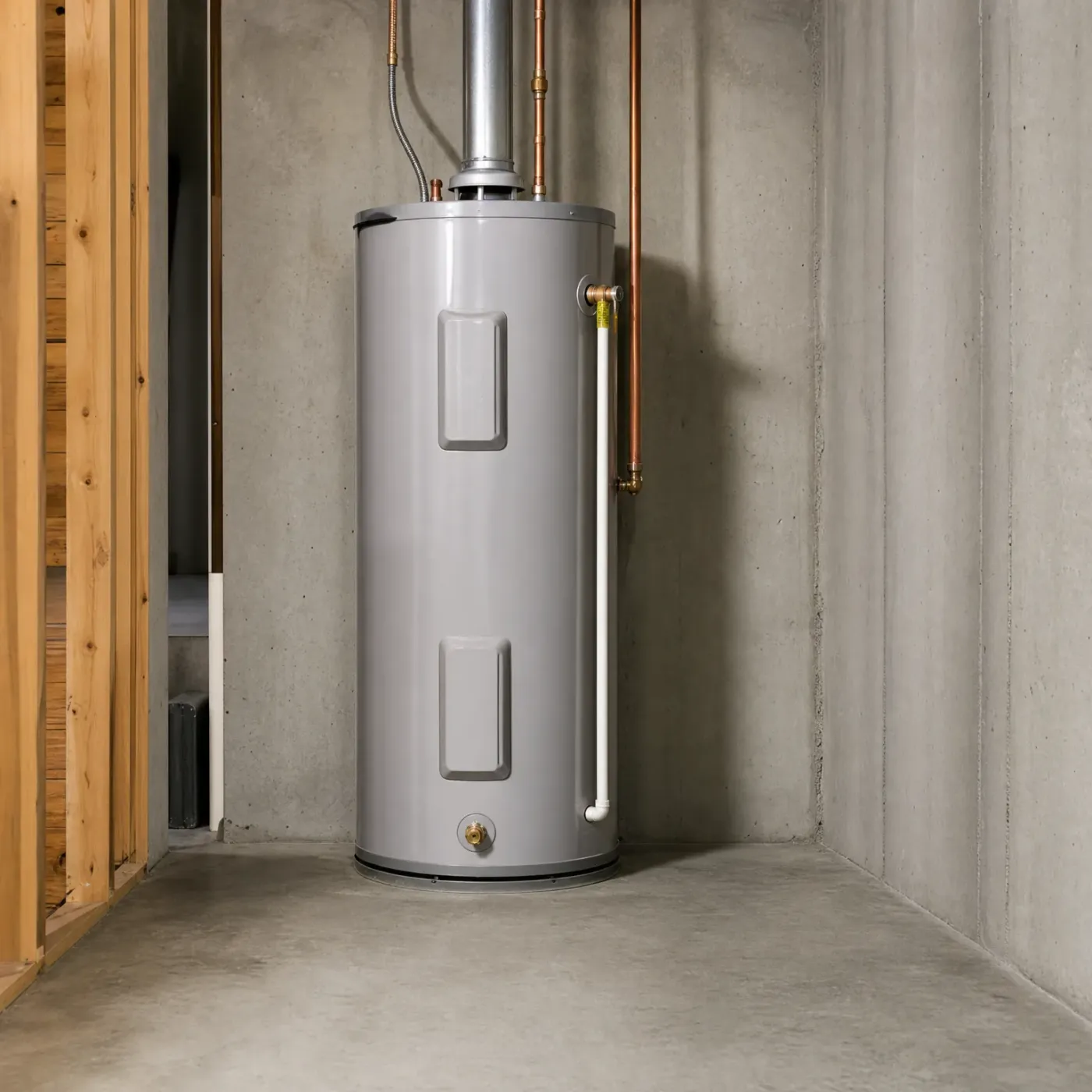
Light popping, a few times when the water heater first fires: the sediment layer is thin enough that it is only starting to trap steam.
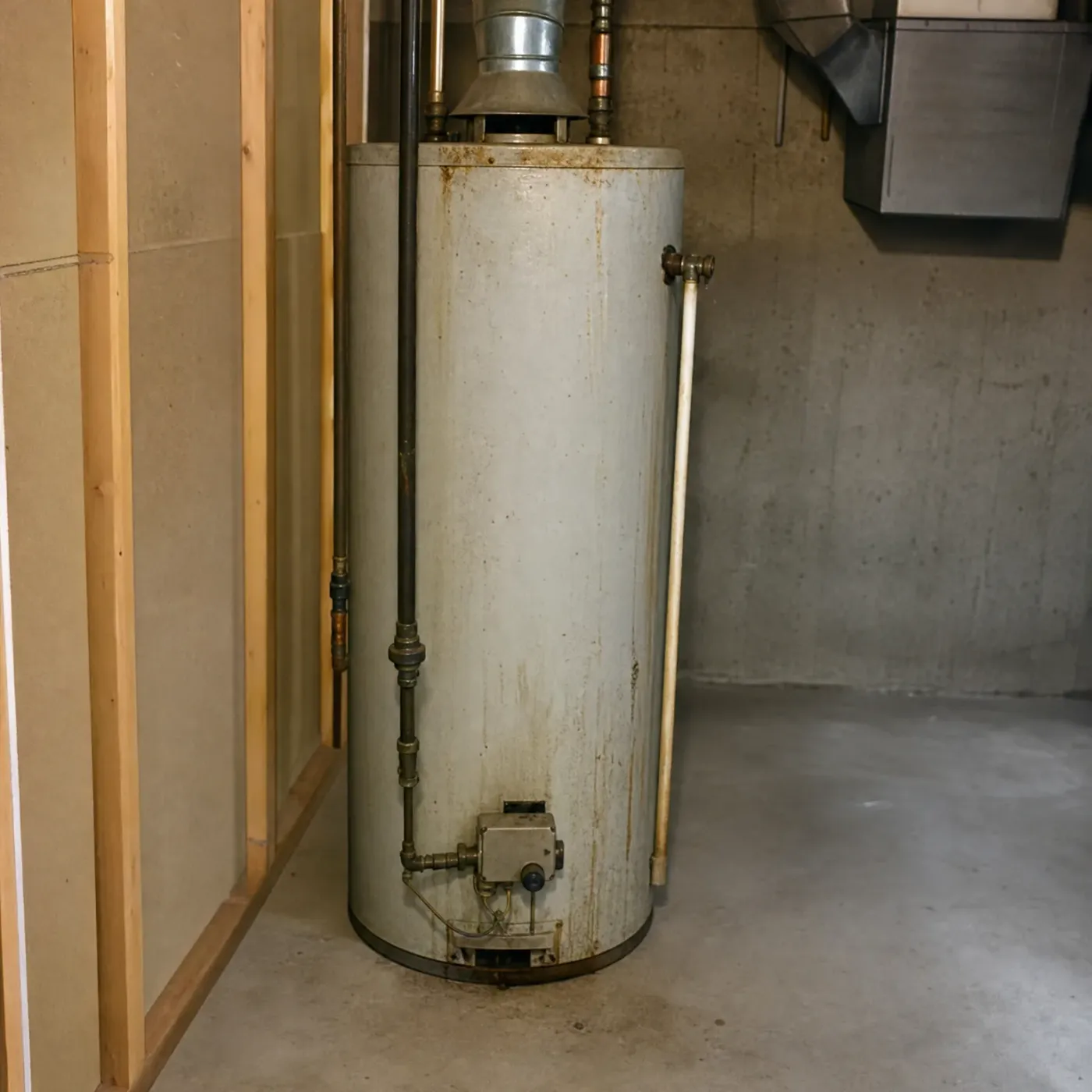
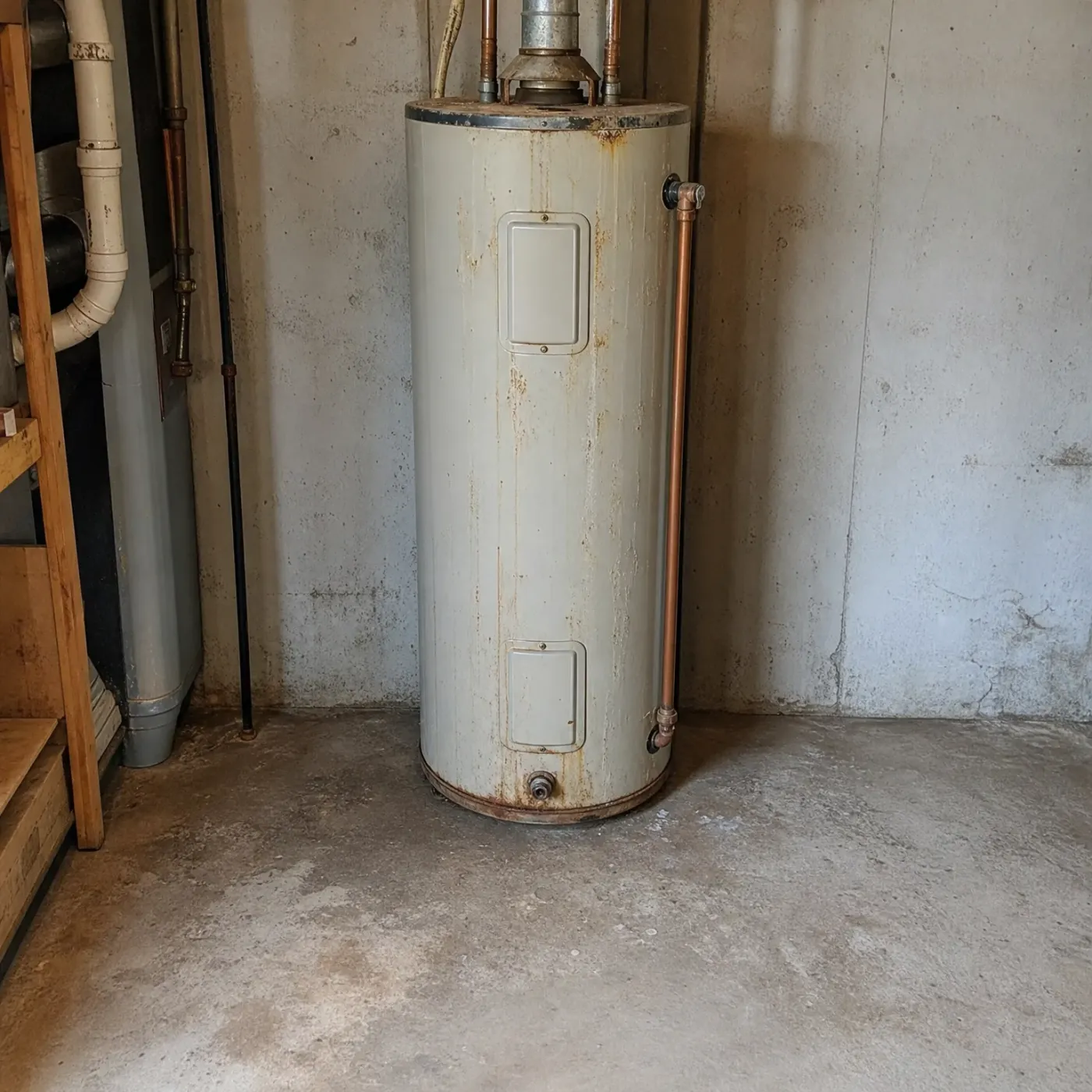
Loud, frequent cracking and banging, especially from an old tank like this one: sediment has built up thick enough to stress the tank itself.
Your water heater most likely runs on electricity, like most homes here, which means two elements are doing the work instead of one burner. The lower element sits right against the sediment that's settled on the tank bottom, so it's the one trying to heat water that's already trapped under that layer. It can't get through to the water above, so it keeps adding energy until the trapped pocket turns to steam. That steam breaks loose, hits the cooler water higher up, and collapses back into liquid. That collapse is the pop you hear. A quick flush clears whatever sediment is still loose, but once it's hardened against the element, it usually needs to be scraped or soaked off directly, flushing alone won't touch it. If the popping happens every single time the tank heats rather than once in a while, the element is cycling harder than it should to push through that layer. Left that way, the hardened scale can eventually work the element loose from its gasket, and what started as a noise turns into a leak at that fitting.
What's Heating Under That Scale
Most homes in Washington heat water with an electric element, so the popping usually comes from both the lower and upper element, not a single burner.
The lower element sits closer to the sediment layer, so it heats trapped water into steam first and most of the noise starts there.
Each pop is a small pocket of steam breaking loose and collapsing back into water once it hits the cooler layer above the scale.
Flushing the tank clears loose sediment, but scale that has already hardened on the element usually has to be scraped or soaked off by hand.
A tank that pops every time it heats, not just once in a while, is running the element through more cycles than it would with a clean tank.
Left alone, the hardened layer can work the element loose from its gasket, which turns a noise into a leak at that fitting.
Before you get your water heater repairAfter you get your water heater repair
Send the request today and let a water heater pro reach out to you.
You're not committing to anything by asking.
Why flushing the tank helps
Draining a few gallons from the bottom of the tank through the drain valve pulls out loose sediment before it packs down hard. Most of it comes out as fine grit in the water. A tank that gets flushed once in a while never builds the thick crust that traps steam. One that never gets flushed keeps adding a new layer every time the water heats, and the popping gets louder over months, not days.
Why it won't just stop
Sediment doesn't break down or wash away on its own once it hardens against the tank wall. Each heating cycle bakes it a little harder and traps a little more water underneath. The element keeps drawing power and heating through that layer whether the noise is there or not. Left alone, the same spot on the tank floor keeps overheating under the scale, and that's the wear that leads to a cracked tank or a burned-out element, not just the sound.
Leave it alone
The sediment keeps hardening and trapping more water under it. The popping gets louder, the element works harder to heat through it, and the tank wears faster than it should.
A contractor can flush the sediment out or check the element if flushing alone doesn't quiet it. You send the request once and stop carrying the problem around.
Most homes in Washington heat water with electricity, which is why that popping is coming from the heating elements, not a gas burner. The elements sit right in the sediment, so they're the first thing to wear once scale builds up around them.
ACS 2020-2024 5-year B25040
What the popping tells you
Popping comes from steam pushing up through sediment that settled on the tank bottom.
Washington's mineral-heavy supply leaves scale behind faster than soft water would.
Electric elements sit inside that sediment layer, so they wear down first as it hardens.
Light, occasional popping means a thin layer; loud, frequent cracking means it has packed in deep.
Flushing the tank clears loose sediment before it hardens and traps more water.
Left alone, the elements work harder and the tank wears out sooner than it should.
The noise has one cause. Water gets trapped under sediment on the tank bottom, the element heats it past boiling, and steam breaks through with a pop. Washington's water leaves that mineral scale behind steadily, so most tanks build up a layer over time whether anyone notices or not. Since most homes here heat water with electricity, the elements sit right inside that layer, which means they take the wear before anything else does. How the tank sounds tells you how far along that process is. A few light pops when the water heater first kicks on means the layer is thin and just starting to trap steam. Loud, frequent cracking means sediment has packed in deep enough to trap a lot more water, and the element underneath it is working harder than it should have to. Flushing the tank is what keeps that layer from forming in the first place. Draining a few gallons through the valve at the bottom carries out the loose grit before it has a chance to harden, which is a lot easier than dealing with scale once it has set. Nothing about the tank fixes itself. Left alone, the sediment keeps hardening, the popping gets louder, and the element keeps working against a layer that is only getting thicker. A tank that gets flushed on some kind of regular basis just does not reach that point. The sound is the tank telling you where things stand, and at this point you know what it means.
Water Heater Repair
A local pro for your water heater repair
Once you send the form, finding a pro is off your list.