Why your hot water smells like rotten eggs in Washington

After you send the request, you're done searching.

Hand off my repair

Why does my hot water smell like rotten eggs?

You turn on the hot water and the smell hits you right away, like rotten eggs. It's not coming from the drain or the garbage disposal. It only happens with hot water, and it might be stronger in some faucets than others. You want to know if this is dangerous, and what's actually causing it, before you decide whether it's worth getting someone out to look at it.

Your water heater's anode rod is reacting with the water inside the tank

That smell comes from sulfur bacteria reacting with the magnesium anode rod inside your tank, producing hydrogen sulfide gas. Most Washington homes run electric water heaters, and the anode rod in an electric tank sits in water that doesn't get the regular heat spike a gas burner would give it, so the reaction has more time to build. The rod is there to protect the tank from rusting, and it's doing its job, but it can leave this smell behind. It's not dangerous to shower in or drink occasionally, but it won't go away on its own, and if it's been happening for a while, the rod may need to be replaced before it wears down and the tank itself starts to corrode.

A smiling man in a gray long-sleeved shirt stands in a kitchen looking to the side, with open shelves of dishes, a white mug on the counter, a potted plant, and a view through a doorway into a living room.
A smiling bearded man in a green sweater sits at a white marble kitchen island with a mug, potted plant and bowl of fruit, in a bright white interior with open shelving and an arched doorway.
A smiling man with dark curly hair and a beard, wearing a dark green knit sweater, stands at a white marble kitchen counter with a dark blue mug, with open shelving, pendant lights and a houseplant behind him.
A smiling man in a green ribbed sweater stands behind a wooden table holding a ceramic mug of coffee in a kitchen with white subway tile, shelves of potted plants, and a bowl of fruit.

Anode Swap or Tank Disinfection

Anode Rod

  • A magnesium anode rod reacts with bacteria in the tank water to produce hydrogen sulfide gas, which is the rotten egg smell.
  • Swapping it for an aluminum or zinc anode rod usually stops the smell without changing anything else about the tank.
  • This fix leaves the bacteria in the water itself, so the smell can return if conditions in the tank favor it again.
  • It's a lower cost repair than a full flush and disinfection, and it can be done in one visit.
  • If your water heater runs on electricity, as most do here, the rod sits under a hex cap on top of the tank and is simple to access.

Tank Disinfection

  • A contractor drains the tank and flushes it with a hydrogen peroxide or chlorine solution to kill the bacteria causing the smell.
  • This addresses the water inside the tank directly, rather than just removing what the bacteria reacts with.
  • It takes the tank out of service for the length of the flush, so you'll be without hot water during the work.
  • Bacteria can reestablish over time, especially if the tank sits unused for stretches or water temperature runs low.
  • Pairing this with an anode swap tends to last longer than either fix done alone.
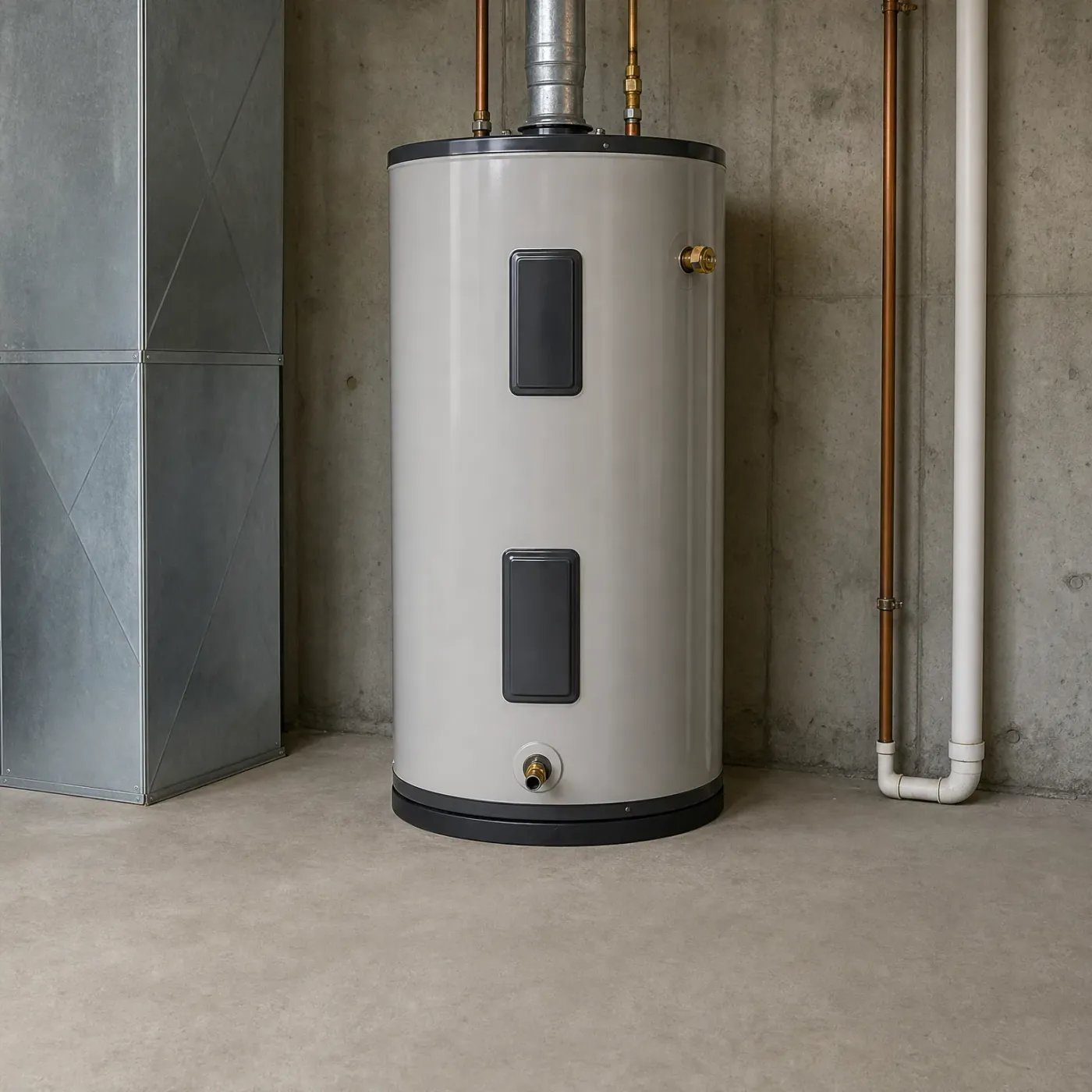
A gray cylindrical water heater stands on a concrete floor against a concrete wall, with copper and black pipes running overhead and a metal duct and dark equipment cabinet to the right.

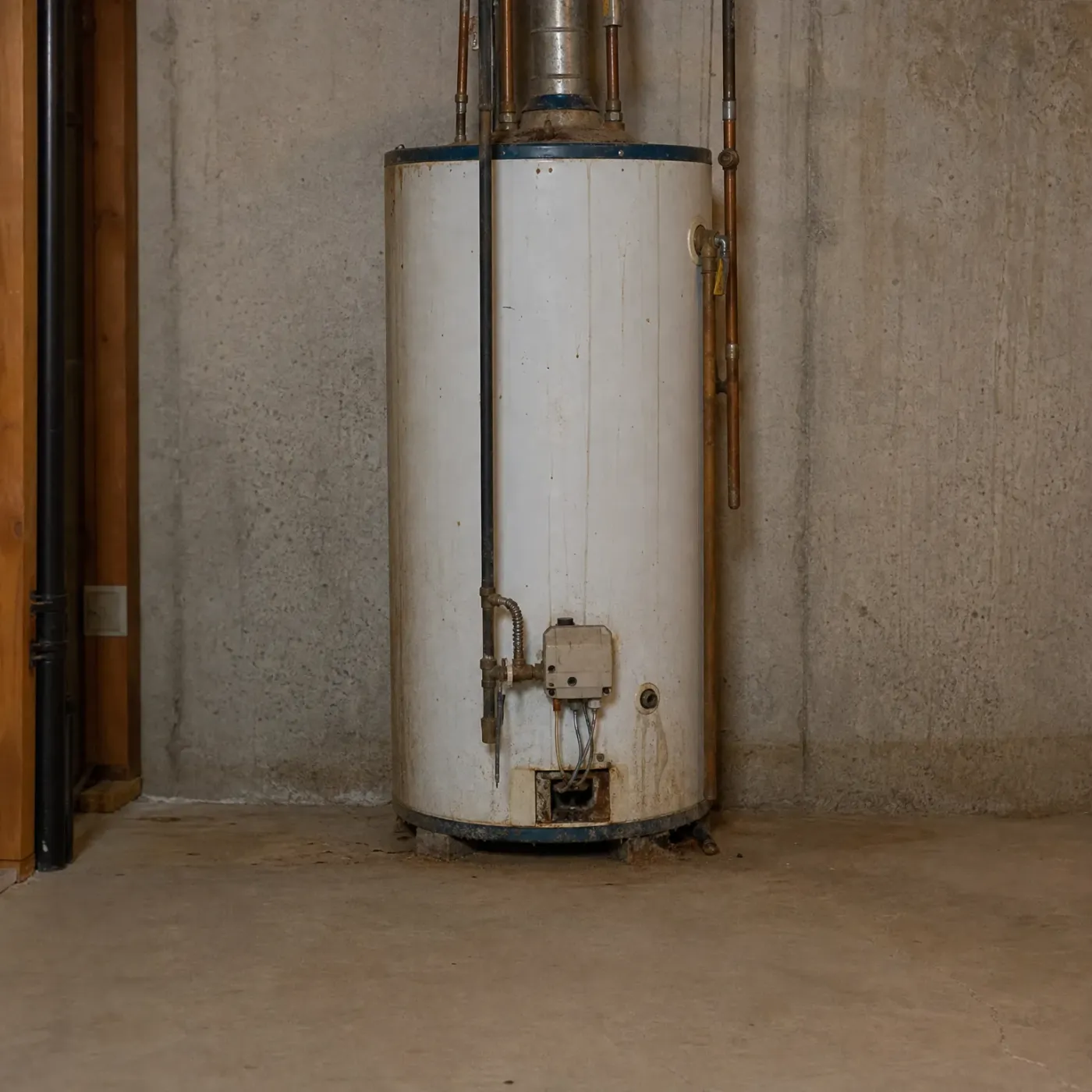
Water heater running clean

No smell when you run the hot water. The tank, the copper lines, the flue all doing their job without anything reacting inside. This is what it looks like when the anode rod and the water in your tank aren't producing hydrogen sulfide gas.

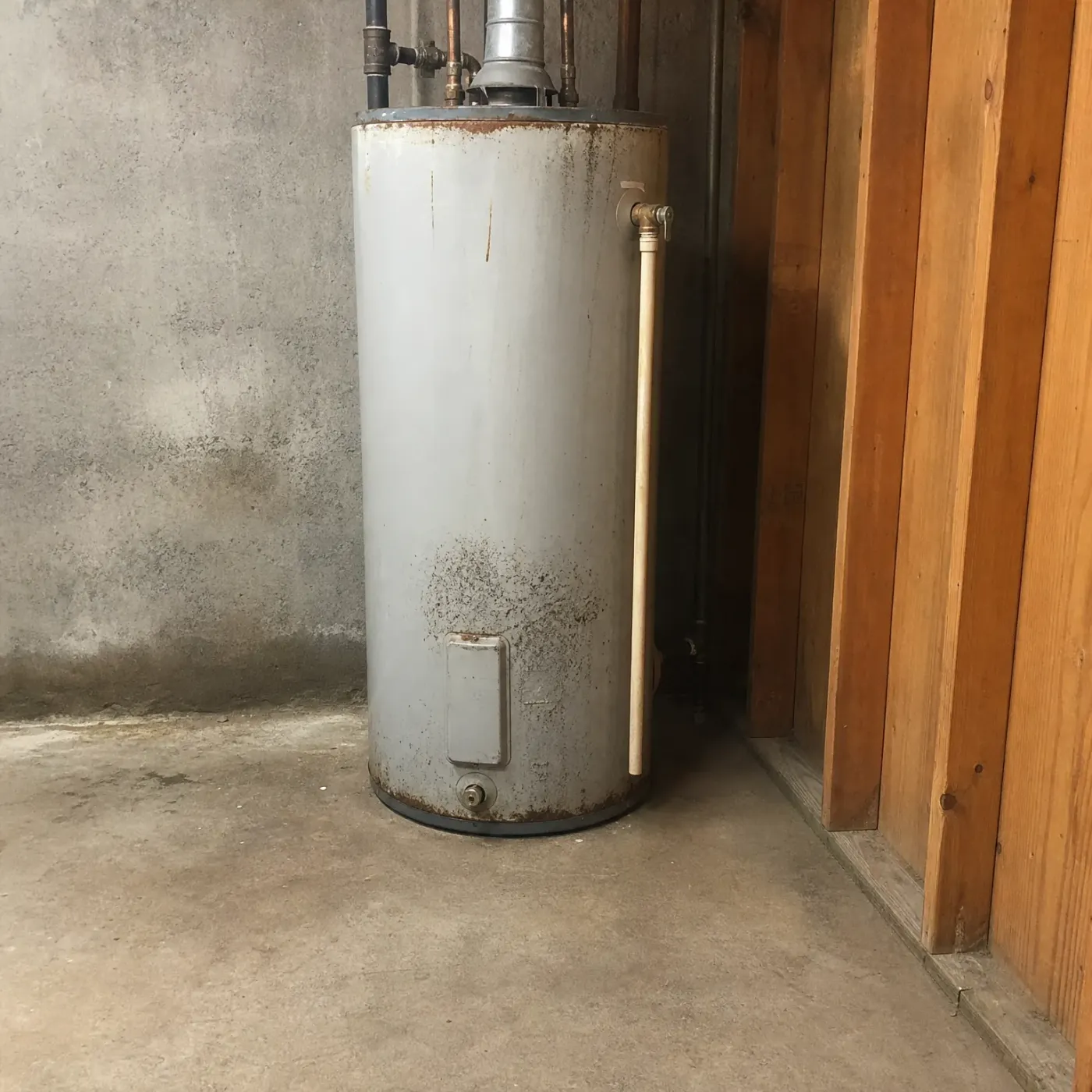
An old white gas water heater with rust stains, copper pipes and a flue stands in the corner of a concrete-walled room with a bare concrete floor and a wooden door frame at left.

Water heater in trouble

Rust stains down the side, a corroded flue pipe, paint worn off the tank. A water heater that looks like this has been sitting a while, and the smell is one more sign something inside has been reacting that shouldn't be left alone.

A rusting gray cylindrical water heater with copper pipes and a drain tube stands on a concrete floor against a concrete wall beside vertical wood paneling.
Before you get your water heater repair
A cylindrical beige water heater with two dark access panels stands on a concrete floor against a concrete wall, with copper and white pipes to the right and sheet-metal ductwork to the left.
After you get your water heater repair

58.6% of homes statewide heat with electricity

Most houses in Washington run their water heater on electricity, same as the rest of the home. An electric water heater still uses an anode rod, and that rod is almost always the source of the smell. Swapping it is a straightforward fix no matter what powers your tank.

ACS 2020-2024 5-year B25040

A bathroom with a glass-door shower lined in marble-look tile with a recessed niche and showerhead, a white towel hanging on a wall-mounted bar, and a window with green foliage outside.

Monday morning, upstairs bathroom, and you reach in to start the shower before you're even awake. The smell gets you first, before the water's warm, before there's any steam on the mirror. Rotten eggs, coming right up out of the showerhead. You shut it off and just stand there a second, towel still on the rail where you left it last night. You run it again, thinking maybe it was something else, but it's the same smell, maybe worse now with the hot water going. The cold tap by the sink is fine. It's only this, only hot, only here.


Hand off the water heater problem

You already know the smell isn't going away on its own. The anode rod in your tank keeps doing what it does until someone swaps it for one that won't react with your water, and that means finding a plumber who works on water heaters, not just anyone who answers the phone. Normally that's calling a few places, explaining the rotten egg smell to each one, waiting to hear back, then weighing quotes against each other while you're still showering with the smell every morning. Sending this request instead means you stop doing all of that. One contractor who handles this gets your information, and the search part of the job is off your plate. You still live with the smell until the rod gets changed, but you're not the one tracking down who can change it.

What the Smell Comes Down To

  • The rotten egg smell comes from hydrogen sulfide gas made when the anode rod reacts with bacteria in the tank water.
  • Swapping the magnesium anode rod for an aluminum or zinc one clears the smell without any other change to the tank.
  • Running on electricity instead of gas doesn't change the fix, since electric water heaters have the same anode rod.
  • The smell only showing up in hot water, not cold, points straight at the tank and rules out the drain or disposal.
  • Left alone, the anode rod keeps reacting the same way every time you run the hot water, so the smell doesn't fade on its own.
  • A plumber who works on water heaters can swap the rod and check the water in the tank in one visit.

The smell has one source: the anode rod reacting with bacteria inside the tank, giving off hydrogen sulfide gas. That gas rides along with the hot water and nothing else, which is why the cold side and the drains never smell like anything. It doesn't matter that your water heater runs on electricity instead of gas. Electric tanks use the same magnesium anode rod, and that rod behaves the same way in either setup. Left in place, it keeps reacting every time hot water moves through the tank, so the smell shows up again the next morning and the one after that. It isn't going to wear off or fix itself.

The fix is swapping that magnesium rod for one made of aluminum or zinc, and the tank keeps working exactly as it did before. No other part of the water heater needs to change.

What's left is finding someone who'll actually do that swap, and that part is usually the slower half. Most plumbers you'd find on your own handle general plumbing and don't spend much time inside water heaters specifically. Sending the form here means you're not the one calling around, describing the smell three different times to three different people, or sitting with quotes trying to guess which one actually knows tanks. A plumber who works on water heaters gets matched to you, swaps the rod, and checks the water in the tank while they're in there. The smell goes once the rod's been changed.

A modern two-story house with dark siding and stone base at dusk, with lit soffit lights, a path of large rectangular pavers set in dark gravel, planting beds, a lawn, and an orange and blue sunset sky above distant trees and water.

Water Heater Repair

Done looking for a water heater pro

Step 1 of 3: Equipment
  • A ceramic vase holding leafy green branches and a shallow wooden bowl sit on a wooden window ledge beside a sunlit window, with a cream upholstered chair and knit throw in the foreground.
    • A local pro who knows water heaters gets your details and gets in touch.
    • Tell a local repair pro what your water heater is doing.
  • Sunlit living room corner with a beige upholstered sofa, a round wooden side table holding a ceramic vase of olive branches, linen curtains at a window, a floor vent in the baseboard, and a woven jute rug on hardwood flooring.
    • After this form, you can stop searching for a water heater pro.
    • One request and the search for a pro is handled.
  • A wooden side table with a single drawer holds a shallow carved wood bowl and a white ceramic vase of green eucalyptus stems, beside a window and an upholstered chair draped with a cream knit throw.
    • Explain the job once and skip repeating it on every call.
    • Skip searching for a water heater pro and answer a few questions instead.
  • Corner of a house with horizontal siding, a white-framed window and stone veneer base, beside a covered entry with wooden steps, a potted plant, mulched beds of green shrubs and a flagstone path.
    • Only one pro gets your request, so you hear from one company.
    • Your request stays with one local pro.