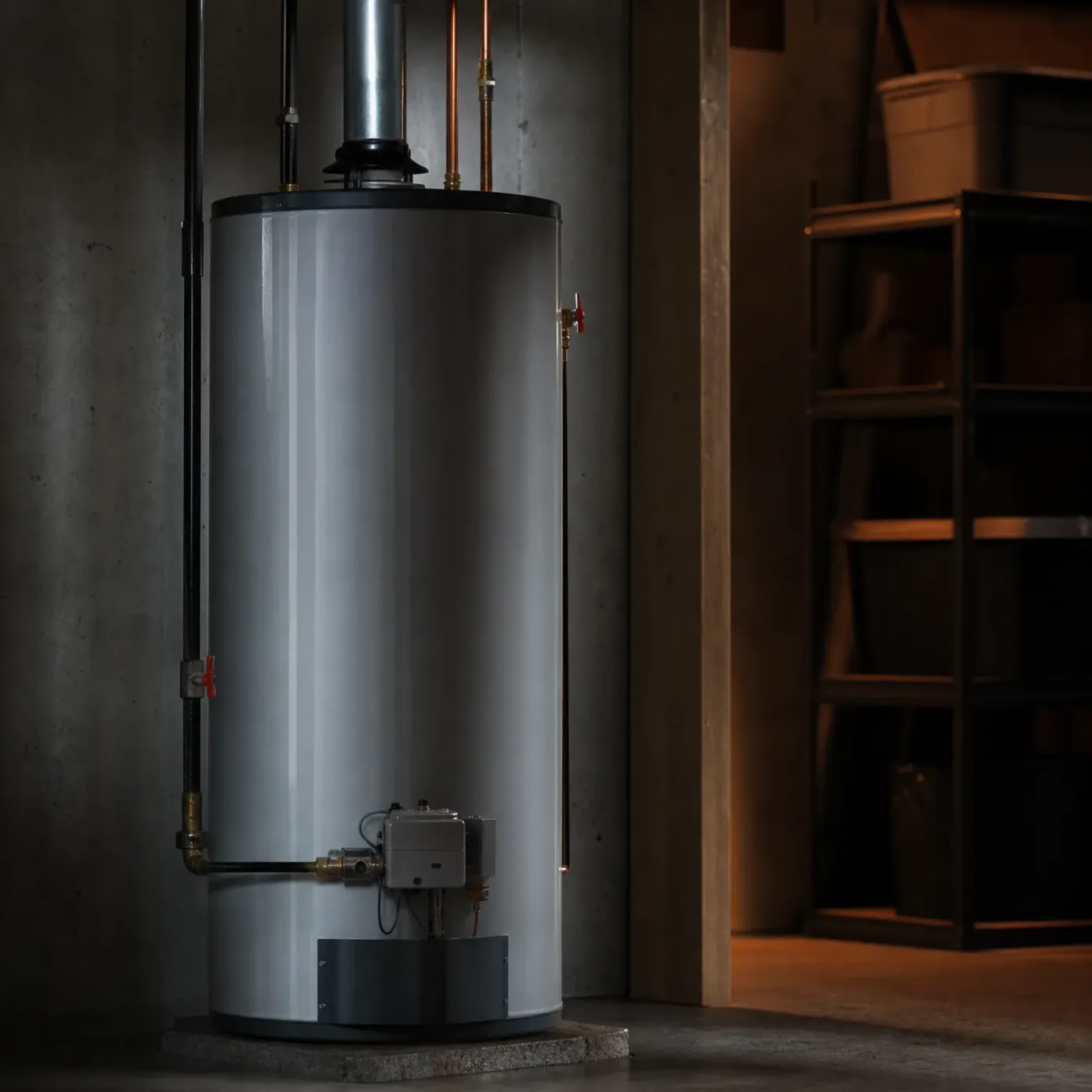
A large gray cylindrical gas water heater with copper and black pipes and a flue stack, standing on a concrete pad against a concrete wall, with a dark metal shelving unit in the background.

One form, no calling around

Why you run out of hot water fast in Washington

Running out of hot water fast usually comes down to a tank that's not heating right or a demand it was never sized for. With most homes here on electric heat, a failing element or a bad thermostat can cut your hot water short even if the tank itself is fine. This page gets into what causes it and what a local contractor checks first, so you're not stuck calling around and repeating the same story to every company you reach.

Skip the search

If your hot water runs out fast, the tank is either not heating the way it should or it never had the capacity for what you're asking of it. Electric water heaters have two elements, an upper and a lower, each with its own thermostat. If the lower element fails, the tank still heats, but only the top third of it, so you get a few minutes of hot water and then cold. A bad thermostat does the same thing even with both elements working, because it shuts off the heating before the tank is actually full of hot water. Sediment settled at the bottom of the tank causes a version of this too, since it sits between the lower element and the water and makes that element work harder and heat less. None of these show up by looking at the tank from outside. What you notice is the shower turning cold sooner than it used to, which means something changed, not that the tank was always too small.

A woman in a cream sweater with her hair in a bun laughs while seated at a stone counter holding a glass of red wine, in a dimly lit interior with a sofa, houseplants and a large window at night.
A woman with long dark hair in a cream knit sweater laughs while looking off to the side, seated in front of a dimly lit kitchen with an island, stools, open shelving and a potted plant, with a glass of red wine in the foreground.
A smiling woman with long dark wavy hair in a light knit sweater sits at a marble counter with a glass of red wine, with a dimly lit living room and kitchen in the background.
A smiling woman with long wavy brown hair in a beige sweater sits at a white marble counter with a glass of red wine, with a living room, dining table and kitchen cabinets behind her.

Electric tanks heat in order, top first. The upper element and thermostat bring the top third up to temperature, then hand off to the lower element for the rest of the tank. When something breaks in that chain, what you notice depends on where the break is. Lose the upper element and hot water disappears almost right away, because nothing at the top is heating at all. Lose the lower thermostat and the element it controls never fires, so you get a few minutes of hot water from the top third before cold takes over. Sediment is a slower problem. It settles on the lower element and makes it work through buildup to heat the same amount of water, so recovery between showers stretches out. A tripped high-limit switch is different again. It cuts power to both elements at once, so instead of hot water running out, there is none to begin with. And sometimes nothing inside the tank is broken. It just was not sized for what the house asks of it, or the hot and cold lines got crossed where they connect.

How the tank actually fails

  • The upper element usually gets power first, and if it fails, you lose hot water almost immediately instead of after a short run.
  • A bad lower thermostat can keep the lower element from ever firing, so the tank only heats the top third of the water.
  • Sediment settling on the bottom element forces it to work through a layer of buildup, which slows recovery between uses.
  • A tripped high-limit switch will shut off both elements at once, leaving the tank stone cold no matter how long you wait.
  • An undersized tank for your household will run out of hot water on schedule even when every part inside it is working fine.
  • Crossed hot and cold lines at the water heater connections can let cold water mix into your hot supply before it reaches the tap.
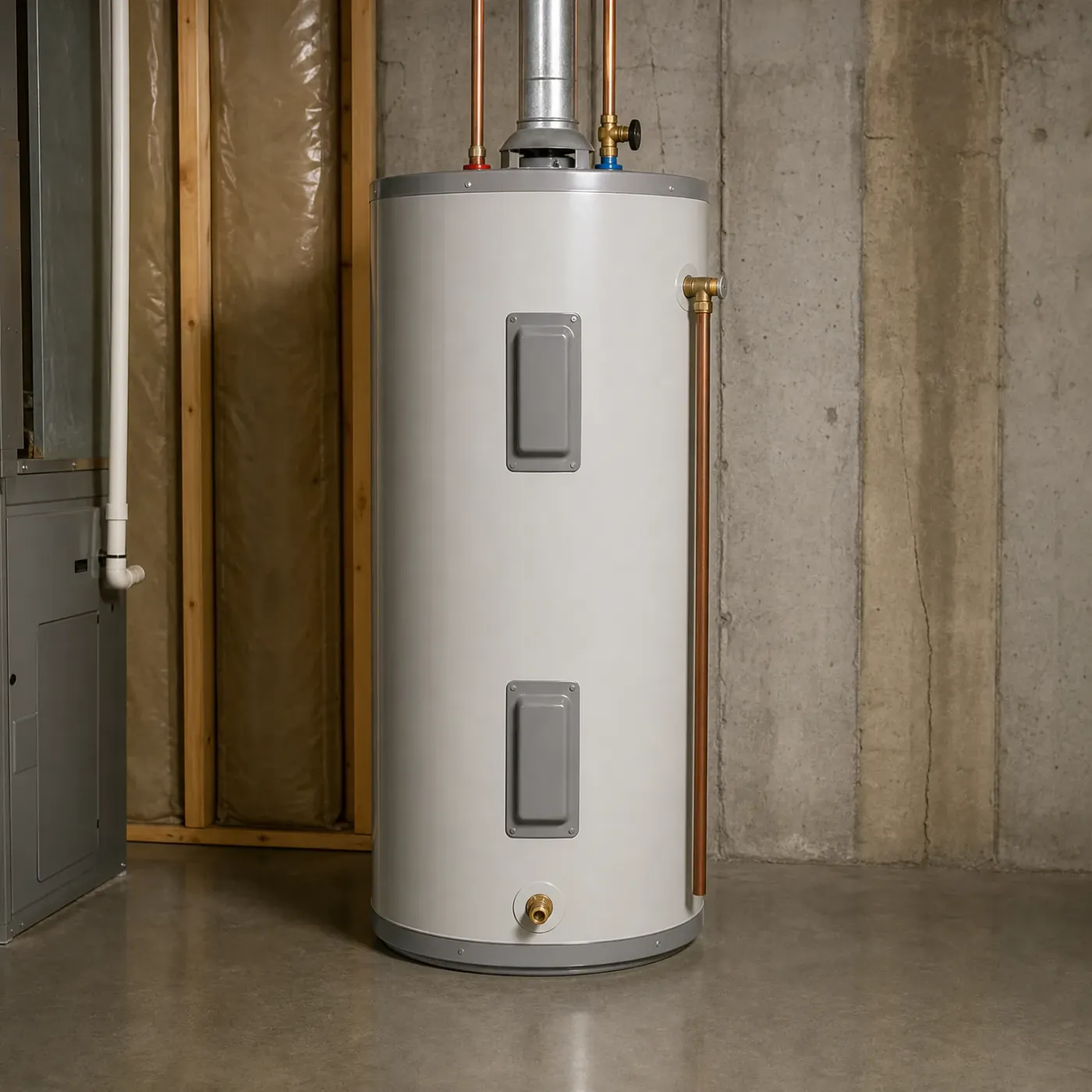
A white cylindrical water heater with two access panels, copper supply pipes and a metal flue, standing on a concrete floor against a concrete wall beside insulated wood framing and a gray electrical panel.
A water heater with both elements working heats the full tank, so you get a consistent, predictable supply.
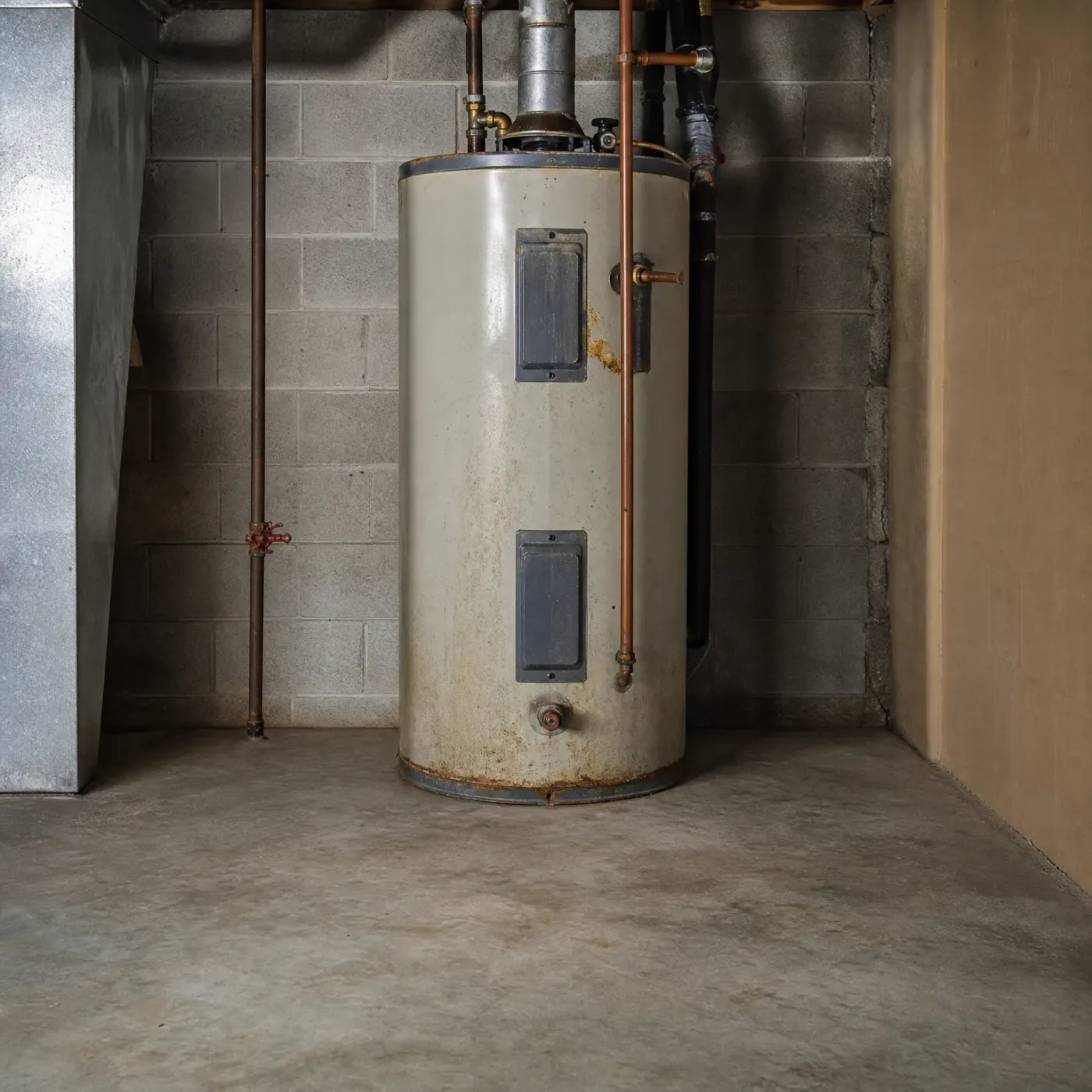
An aging cream-colored water heater with rust streaks and two access panels stands on a concrete floor against a concrete block basement wall, with copper and black pipes running up to the ceiling and a metal duct at left.
Rust like this on the tank often means a failing element or a dying thermostat, both repair jobs, not a replacement.

Is your hot water running out faster than it used to?

You notice it most at the end of a shower, when the water turns lukewarm then cold within a few minutes instead of lasting through. Maybe the water never gets as hot as it used to, even right at the start. Some households hear a popping or rumbling from the tank, which usually means sediment has built up on the bottom and is getting between the lower element and the water it's supposed to heat. If a thermostat or element has failed, that part won't fix itself, and running an electric water heater on one working element for months means more strain on the one that's left. Left alone, that second element can fail too, and then there's no hot water at all.

A smiling bearded man in a navy crewneck sweater sits at a dinner table with a glass of red wine, plates and glasses in the foreground, in a dimly lit room with a lamp and framed picture behind him.
A woman in a dark gray sweater reclines on a light sofa with eyes closed and a slight smile, under a textured gray blanket with an open book resting on her lap, with a lit table lamp and plant in the background.

Skip the search

Only one pro gets your request, so you hear from one company.

It costs nothing to send, and you don't have to hire anyone.

How an Electric Tank Actually Runs Short

  • Electric water heaters recover slowly, about 3 to 5 gallons per hour per element, so a weak element shows up as a short supply, not a sudden outage.
  • A thermocouple or igniter isn't part of this picture at all since electric tanks have no gas burner to light.
  • The dip tube feeds cold water to the bottom of the tank, so if it's broken, cold water mixes in near the top and cuts your hot water short.
  • A tank's hot water comes off the top, so even a full tank runs short fast if only the top few inches are actually hot.
  • Thermostats are set at the factory, usually around 120 degrees, and one stuck on low will quietly shrink your supply without tripping anything.
  • A worn heating element draws the same current but transfers less heat into the water, so the breaker never trips while your hot water still falls short.

An electric water heater builds hot water slowly. Each element only recovers about 3 to 5 gallons an hour, so the tank depends on both elements doing their job, not just one burst of heat. There's no burner or igniter involved anywhere in this, so if a repair call ever mentions a thermocouple, that's not your system. What matters here is the dip tube and the elements. Cold water enters through the dip tube and is supposed to land near the bottom, where the lower element heats it first. If that tube has cracked or broken off, cold water dumps in near the top instead, mixing with the hot water you're about to draw and cooling it fast. Since the tap pulls from the top of the tank, you feel that mix within minutes, even if the tank is still mostly full. The thermostats add another way this goes wrong quietly. They're set at the factory, typically near 120 degrees, and if one drifts low or fails, the element it controls stops heating anywhere near the target. The breaker doesn't notice, because a worn element can draw its normal current while putting far less heat into the water. So the tank looks fine from the outside, pulls the same power it always has, and still can't keep up by the time you're rinsing off.

58.6% of homes statewide heat with electricity

Most houses in Washington run their water heater on electricity, yours probably included. That means two elements are doing the work of keeping a full tank hot, and either one can quit on its own, so losing hot water fast is more likely to be a failed part than a tank that's too small.

ACS 2020-2024 5-year B25040

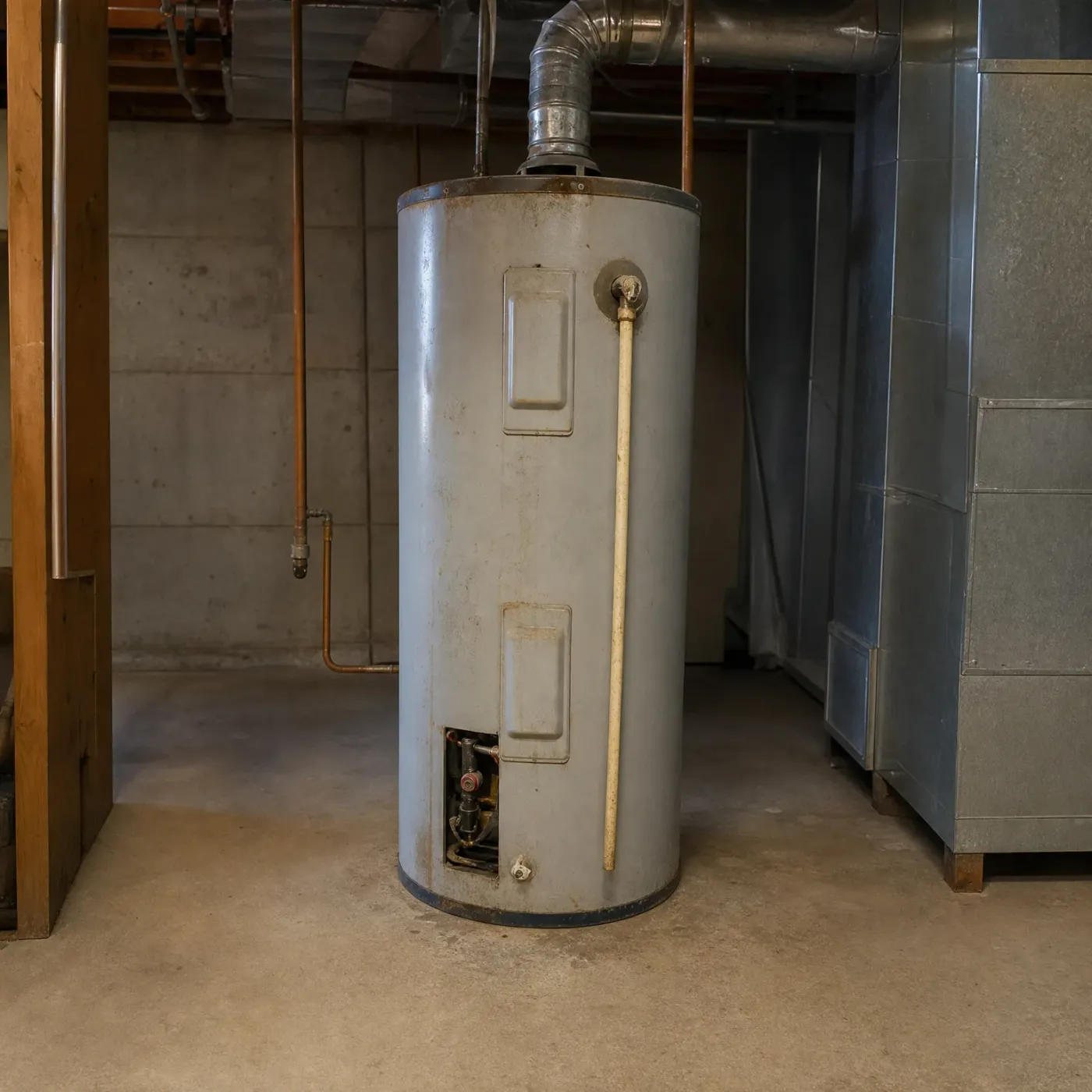
An older gray gas water heater with a metal flue pipe stands on a concrete basement floor beside ductwork and exposed copper piping.
Before you get your water heater repair
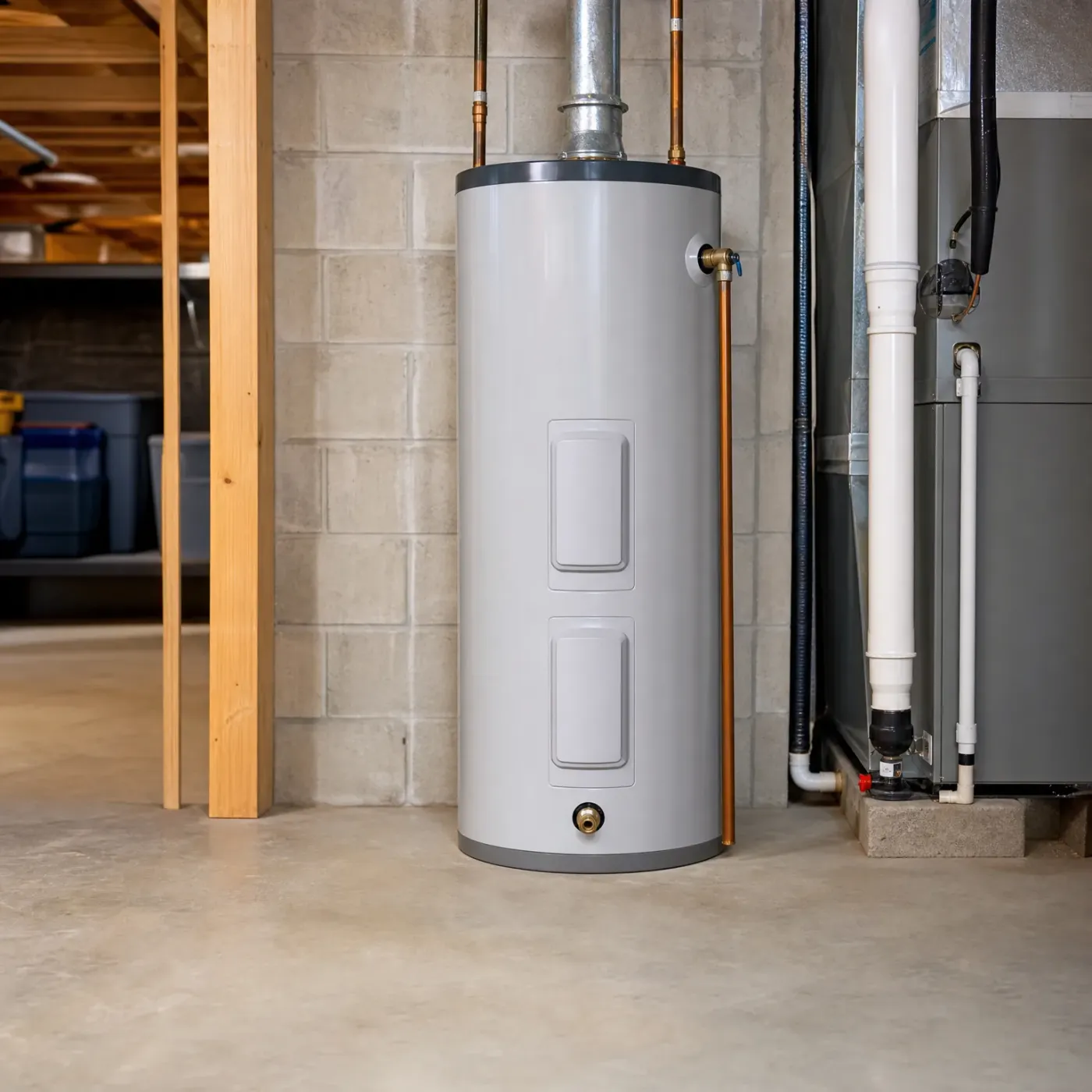
A gray cylindrical water heater with copper pipes stands against a concrete block wall in a basement, next to white PVC piping and a gray furnace, with wood framing and storage bins at left.
After you get your water heater repair

3 to 5 gallons an hour

That's roughly what one element recovers. With the upper one dead, you're living off the lower element alone, and that gap shows up fast in a full shower.
Find a licensed water heater pro

Two elements, one job

Electric tanks split the work between upper and lower elements. When one quits, the other can't cover the full tank, no matter how new the water heater is.

Find a licensed water heater pro
A closed dark laptop and a ceramic mug of coffee on a wooden dining table, with wooden chairs, a dark kitchen cabinet with cutting boards and a potted plant, and a leafy plant by a window in the background.

A short supply almost always traces back to one element or thermostat

Running out of hot water fast means something in the tank stopped doing its share. One element can fail while the other keeps working, and that's why the water still gets warm, just not enough of it and not for long. A licensed technician who works on electric tanks can test both elements and both thermostats and tell you which one quit.

Finding that person is the part you don't have to do tonight. No calling around to ask who even works on water heaters, no repeating the same description of your shower going cold to three different companies, no sitting with quotes trying to guess which one is honest. One local contractor, already familiar with how electric tanks fail in homes like yours, takes the call instead.

Interior corner with a beige sofa holding a dark green and a light cushion and a textured throw, a potted small-leaved tree beside a white-framed window, and a dark shallow bowl on a wooden coffee table in the foreground.
A single-story stucco house at dusk with a lit paver walkway lined by low path lights, desert plants and boulders in front, and distant mountains under an orange and blue sky.

Water Heater Repair

Skip the calls to every shop

Step 1 of 3: Equipment
  • A dimly lit living room corner with a beige upholstered sofa holding a dark green cushion and a chunky knit throw, beside a wooden sideboard with a lit ceramic table lamp, a small potted plant, and a wooden bowl, with a framed artwork on the wall and a mug on a book in the foreground.
    • Tell a local repair pro what your water heater is doing.
    • Say what's going on with your water heater, and a pro who works on them reaches out.
  • A round wooden coffee table holding a round stone vase of green foliage, a lit candle in a glass container, and a small dark bowl, with a beige sofa, cushions and knit throw behind and a window at left.
    • Get the water heater repair search off your mind today.
    • Once you send the form, finding a pro is off your list.
  • Sunlit living room with a wooden coffee table holding a ceramic vase of leafy branches and a carved wooden tray with two stacked books, in front of a beige sofa with tan and green cushions and a potted plant near a window.
    • Describe what your water heater is doing once, in one form.
    • Answer a few questions instead of calling shop after shop.
  • Interior corner with a lit ceramic table lamp and wooden bowl on a wood sideboard, a framed picture and branch-filled vase behind, a knit throw over an upholstered chair, and a lit candle in a glass holder, stoneware mug and round planter of green foliage on a wooden table in the foreground.
    • The pro who reaches out is licensed in Washington.