

Signs your water heater needs replacing in Washington
One request and the search for a pro is handled.
Let a pro reach outA water heater that is failing shows it in a few clear ways. Water takes on a rusty tint or a metallic smell, the tank makes a low rumbling or popping sound as sediment hardens on the bottom, or you run out of hot water faster than you used to. Rust around the fittings or a damp spot at the base of the tank means it is starting to leak, and a tank that leaks will not stop. Since most homes in Washington heat water with electricity, a failing heating element is usually the reason recovery slows down, not a part running out of gas. None of these signs mean you need to act that day, but they do mean the tank is on its way out, and replacing it on your own schedule beats replacing it after it floods a closet. Catching it now, before winter, means you are not without hot water when you need it most.
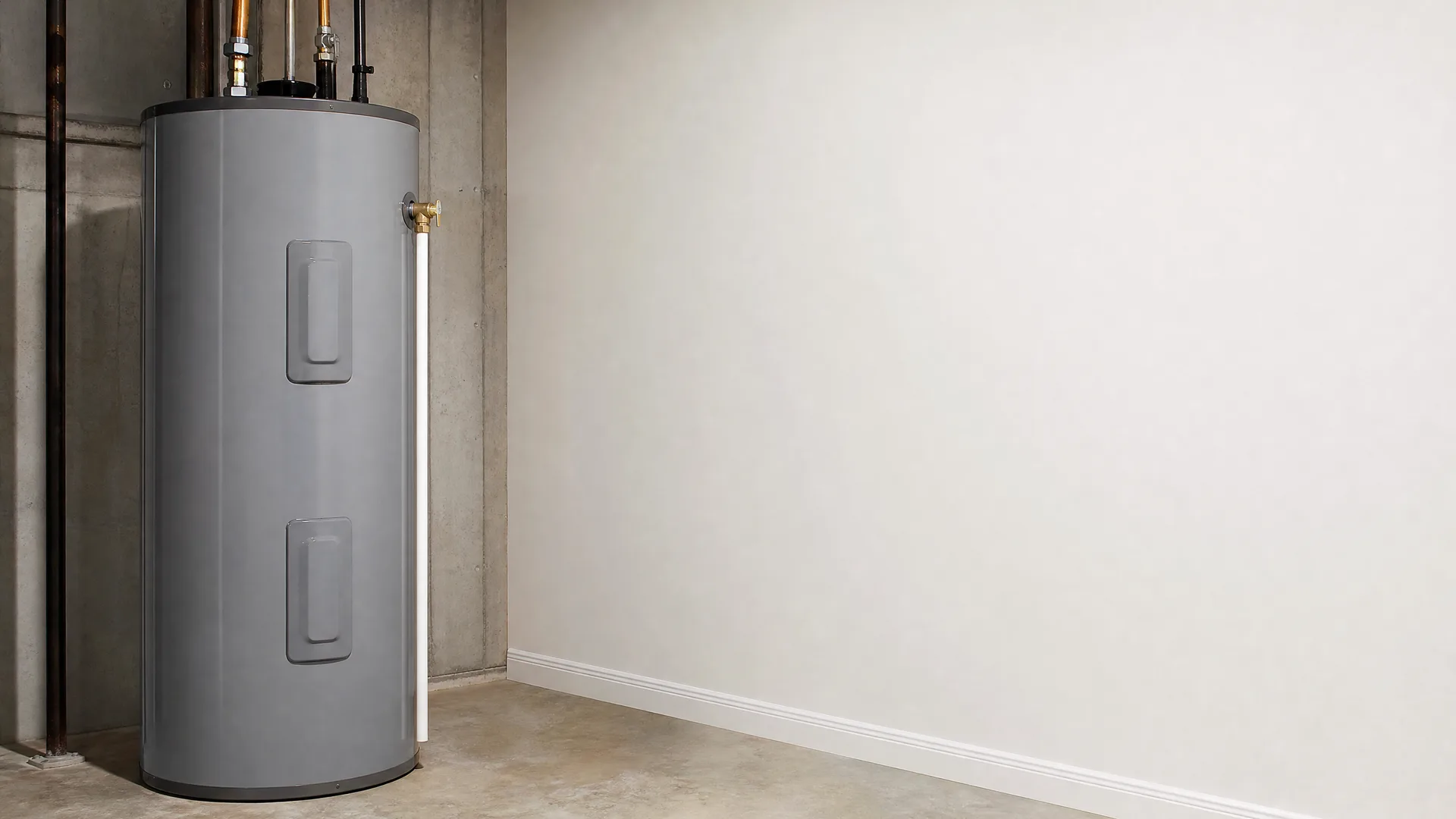
Rumbling means sediment buildup
Washington water tends to be soft, but sediment still settles to the bottom of the tank over years of use. That layer hardens and cracks as the burner or element heats the water beneath it, and the popping or rumbling you hear is water trapped under that crust working its way out. A tank making that noise is working harder to heat the same amount of water than it used to.

Electric tanks fail differently
Most homes here run electric water heaters, and the failure signs look different than a gas unit's. There's no pilot light to watch and no flue to check for backdraft. Instead, watch the breaker and the recovery time. An element that trips the breaker repeatedly or a tank that takes noticeably longer to reheat after a shower is nearing the end, even if the water still looks and smells fine.
Repair It or Replace It
Repair
- A single part failure, like a thermostat or heating element, usually costs less to fix than a full replacement.
- If the tank itself is sound and only a component failed, repair gets you hot water back without a new installation.
- Repair makes sense if the unit is still within the years most electric water heaters are expected to last.
- A repair buys time if you're not ready to plan for a replacement this season.
- If the rust and sediment signs are mild and recent, a repair may resolve the immediate problem.
Replace
- Once the tank itself is rusting or leaking, no repair fixes that. The tank has to be replaced.
- A new unit runs on today's efficiency standards, which matters given how many Washington homes heat water with electricity.
- Replacing now means you choose the install on your schedule, not in the middle of a cold morning with no hot water.
- If the heater has needed more than one repair already, another fix is likely a short-term patch, not a solution.
- A new water heater comes with a fresh warranty, so you are not paying for parts and labor on an aging unit.




Let someone else find the pro

Skip collecting and comparing quotes for the new water heater.
No charge to send it. You decide if you hire them.
What a weak water heater costs you
A water heater that is struggling doesn't just run out of hot water faster. It works harder to get there, and on an electric rate that's cheap by national standards, that extra draw still shows up as a line on the bill that creeps up each month without any other change in the house. If the thermostat or element is failing, it may cycle longer to reach temperature, or hold a lower temperature than you've set. You end up turning up the dial to compensate, which only adds to what it's pulling. A unit near the end of its life rarely fails by getting cheaper to run first.
What a tank failure puts at risk
Most water heaters sit in a garage, a closet, or a basement, often near flooring, drywall, or stored belongings. A slow leak from a corroded tank can go unnoticed for days, soaking into whatever is nearby before anyone sees standing water. A full tank failure releases everything it holds at once. Either way, the damage isn't limited to the unit itself. Replacing a water heater before it fails is the only way to avoid that outcome entirely, since once a tank splits, there's no repair that puts it back together. Catching the warning signs early is what gives you the choice.
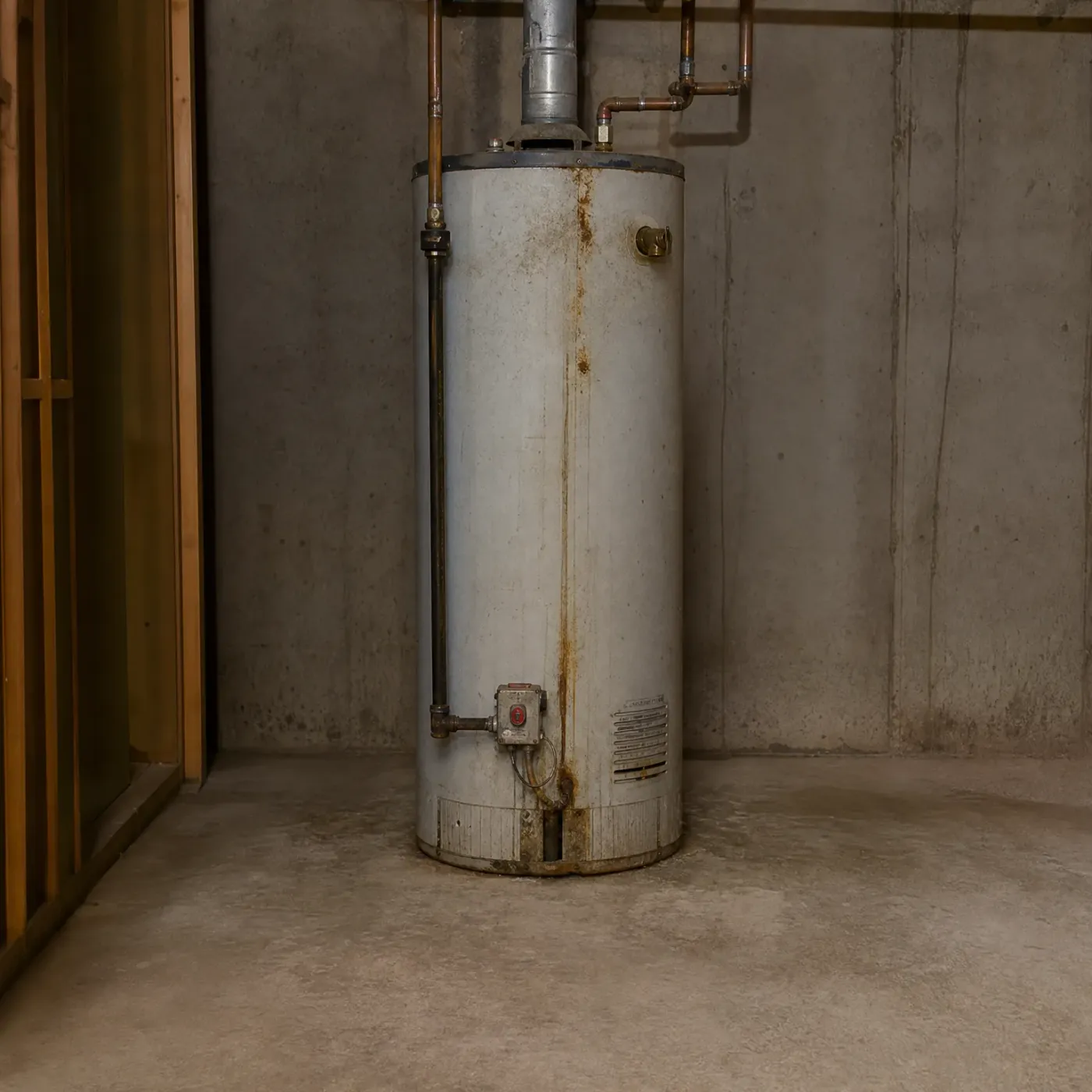
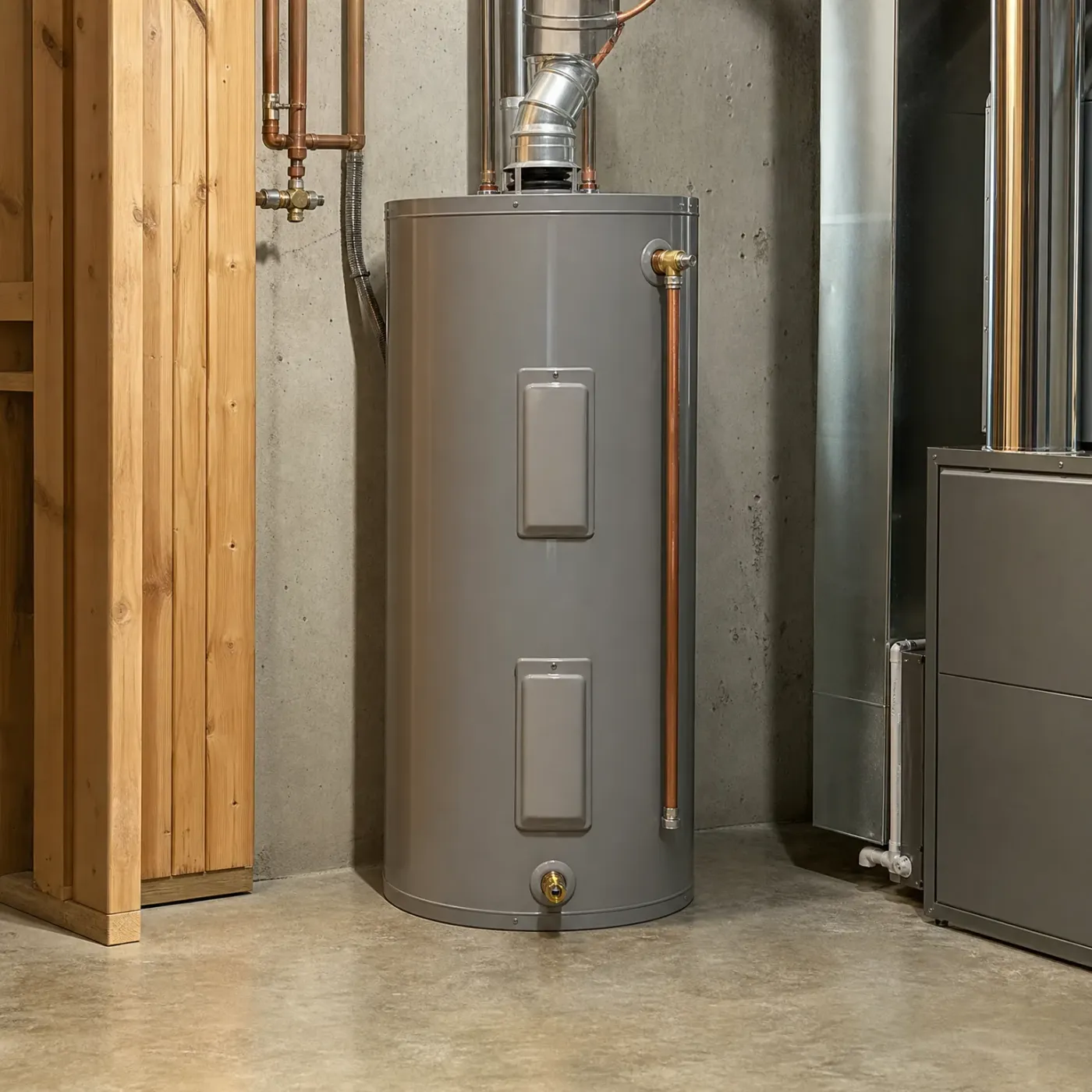
Every tank water heater has a lining, usually glass or stone enamel, that keeps the steel underneath from touching water. That lining is why the tank doesn't rust through in the first year. Running down the center is a steel anode rod, and its whole job is to corrode first so the tank doesn't have to. As long as that rod has metal left on it, the tank stays protected. Once it's used up, the water starts working on the tank itself, and that's when you get pinhole leaks rather than a slow drip you can tighten. The failure usually starts at a seam or along the bottom, where sediment has been sitting against bare metal the longest. If you ever find water pooling underneath the tank, that's not a loose fitting. The tank has already breached. None of this depends on whether the water heater runs on gas or electric. Both kinds have an anode rod, and both run out at the same point in that process, which is why age matters more than fuel type when you're trying to tell if yours is close to the end.
What's happening inside the tank
- Most tanks sit behind a glass or stone-enamel lining that keeps the steel underneath from touching water directly.
- A steel anode rod runs down the center of the tank and corrodes on purpose so the tank wall doesn't have to.
- Once the anode rod is used up, the water starts working on the tank itself, and that's when pinhole leaks start.
- A tank usually fails at a seam or the bottom first, since that's where sediment sits against bare metal the longest.
- Water pooling under the tank almost always means the tank has already breached, not that a fitting is just loose.
- A gas or electric water heater's working life runs on the same clock once the anode rod is gone, regardless of fuel type.


58.6% of homes statewide heat with electricity
Most homes in Washington run their water heater off electricity, same as the furnace. That tank sits on the same panel as everything else in the house, so a failing element doesn't just mean lukewarm showers. It's drawing power the whole time it struggles to keep up.
ACS 2020-2024 5-year B25040

Sediment hardens on the tank bottom and insulates the burner or element.
The heater runs longer to push heat through that layer.
The steel tank wall underneath starts to corrode once the anode rod is spent.
Small cracks form and leak before the tank fails outright.

Where that leaves you
Rusty water, a tank that rumbles, hot water that runs out early, or a heater pulling power without doing its job: any one of those means it's time to look closely at what's in your garage or utility closet. A thermostat or element can often be replaced on its own. A tank with rust in the water or cracks forming doesn't get better, and in a house running electric heat, a struggling tank just adds to a bill you're already watching.
You don't have to sort out which it is on your own, or spend an evening calling around to find out who even works on water heaters in your area. Send the form and the search part is done. No more comparing quotes or explaining the rumbling and the rust to a third contractor who never calls back. Someone qualified takes it from here, and you go back to just wanting hot water in the morning.

One request and it's handed off
Skip searching for a water heater pro and answer a few questions instead.