Profile view of a bearded man wearing a dark green baseball cap and a dark gray T-shirt against a plain light background.

Is a heat pump water heater worth it in Washington

Step 1 of 3: Equipment

Is a heat pump water heater worth it in Washington?

You're probably weighing a heat pump water heater against a standard electric one, trying to figure out if the switch actually pays off here. With power as cheap as it is in Washington, that math matters more than it would somewhere else. You want to know if the upfront cost is worth it or if you're better off sticking with what you have.

Yes, but the savings are smaller here than in most states

A heat pump water heater uses a fraction of the electricity a standard electric water heater does, because it moves heat into the water instead of generating it with a resistance element. That part holds true no matter where you live. What changes in Washington is how much that efficiency is worth. Electricity here costs less than the national average, so the dollars you save each month on the water heater itself are smaller than what a homeowner in a high-cost state would see. The unit still uses less power. It just takes longer for that lower usage to add up to real savings on a cheap rate. For most homeowners here, it's worth it over the life of the water heater, just not a fast payoff.

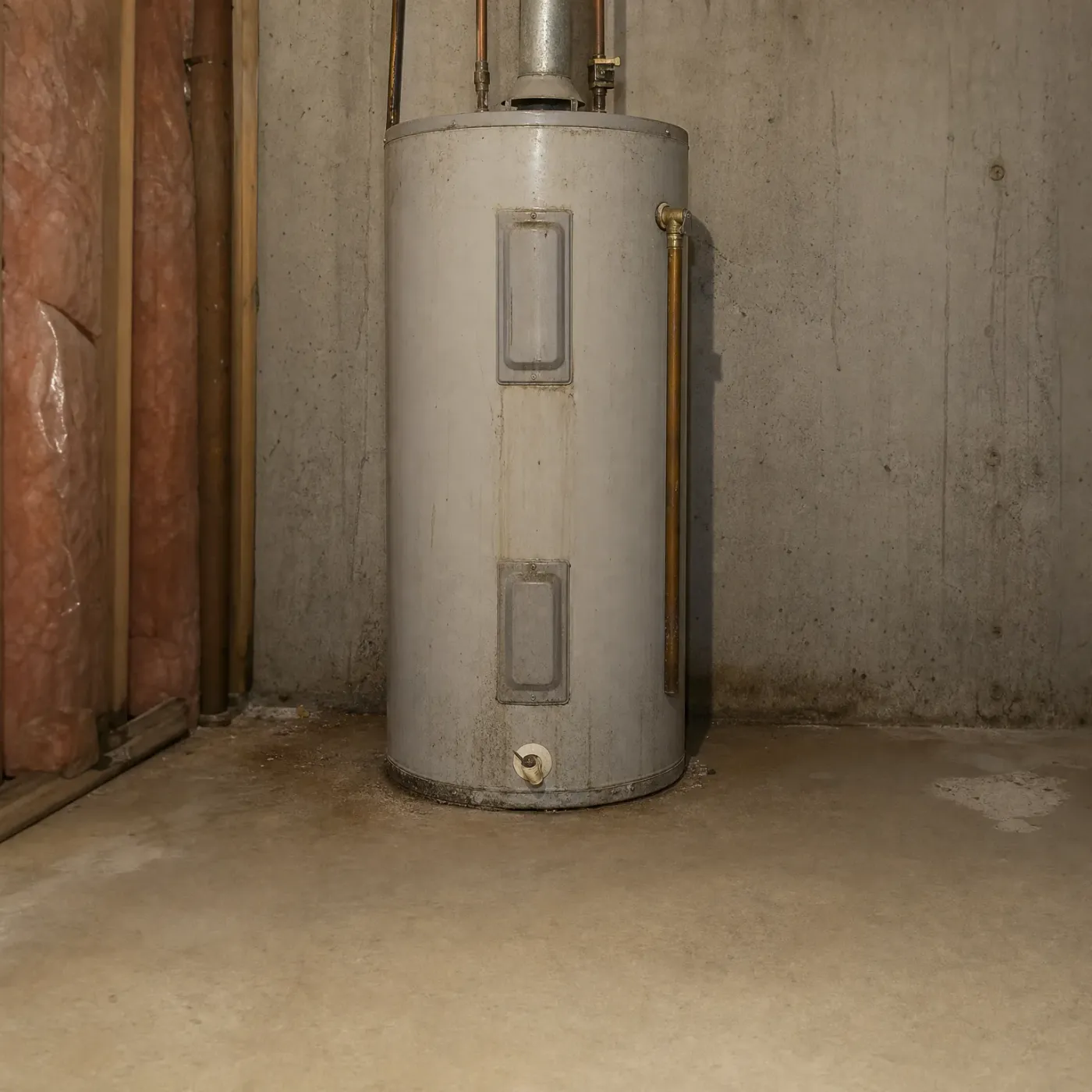
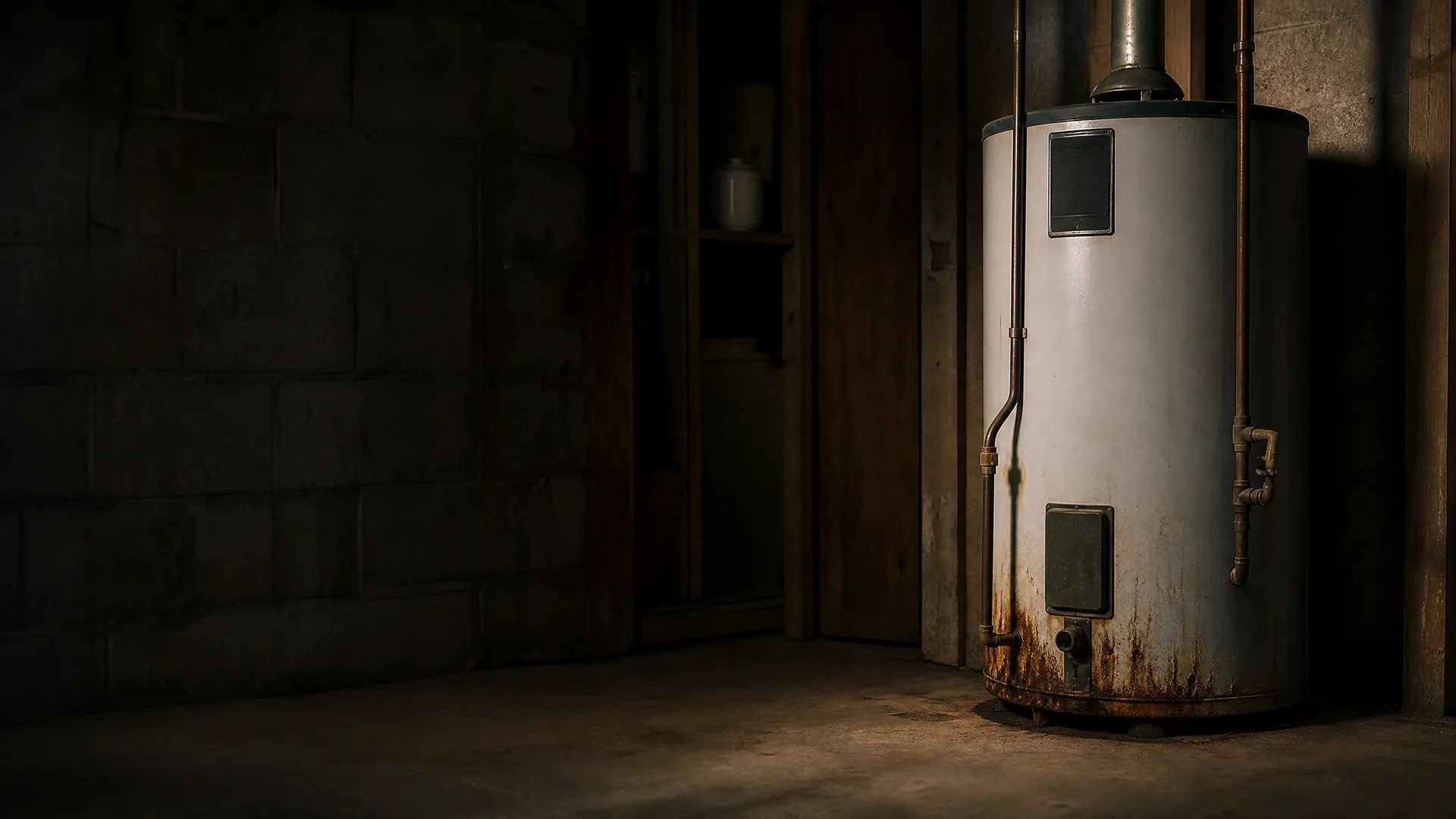
A rusting cylindrical water heater with attached pipes and flue stands in a dim basement corner beside a concrete block wall and a wooden door.

You go down to the utility room after dinner to grab something from the shelf, and the overhead bulb catches it before you do: a thin line of rust working down the side of the tank, pooling faint and orange where the metal meets the floor. You crouch and touch it, half expecting it to be old and dry, but it's not. The tank is still warm against your palm, doing its job like nothing's wrong. You stand there a second, weighing whether this is something to deal with tonight or something that can wait until the weekend. Outside it's cool and quiet, the kind of mild evening Washington gets most of the year. Inside, you're just standing in the doorway, looking at a water heater that's telling you it won't be long now.

Heat Pump or Standard Electric

Heat Pump Water Heater

  • It moves heat out of the air around it instead of generating heat directly, so it uses less electricity to heat the same water.
  • It needs somewhere around 1,000 cubic feet of air space to draw from, so a small closet usually won't work without ductwork.
  • It pulls heat out of the room it sits in, which drops the temperature in that space by a few degrees while it runs.
  • Since most homes in Washington heat with electricity, the lower electric use from the heat pump shows up directly on the same bill as the furnace.
  • Mild summers here mean the unit won't get the heat gain some owners in hotter states notice in their garage or utility room.
  • Parts specific to the heat pump, the compressor and the fan, are additional components that can need service beyond what a standard tank has.

Standard Electric Water Heater

  • It heats water with electric resistance elements only, so it draws more power to produce the same amount of hot water.
  • It fits in a small closet or alcove since it doesn't need surrounding air to pull heat from.
  • It doesn't cool the room around it, so it's a fine fit for a small interior space near living areas.
  • With electricity priced as low as it is in Washington, the higher electric draw costs less here than it would somewhere with higher rates.
  • It has fewer parts than a heat pump unit, since there's no compressor or fan involved in how it heats water.
  • Recovery time after a draw of hot water tends to run faster since the elements heat directly rather than relying on heat transfer from the air.
  1. A fan pulls room air across a cold evaporator coil.

  2. Refrigerant inside the coil absorbs that heat and turns to gas.

  3. A compressor squeezes the gas, raising it to a much higher temperature.

  4. That heat passes through a condenser coil wrapped around the tank.

A woman and a child wrapped together in a thick knitted blanket on a sofa, both with eyes closed, with a lit table lamp and houseplant in the dim background.
An older woman with gray hair in a bun and glasses, wearing a beige knit sweater, smiles while looking to the side in a warmly lit kitchen, with a loaf of bread on the counter in the foreground and a snowy scene outside the window.
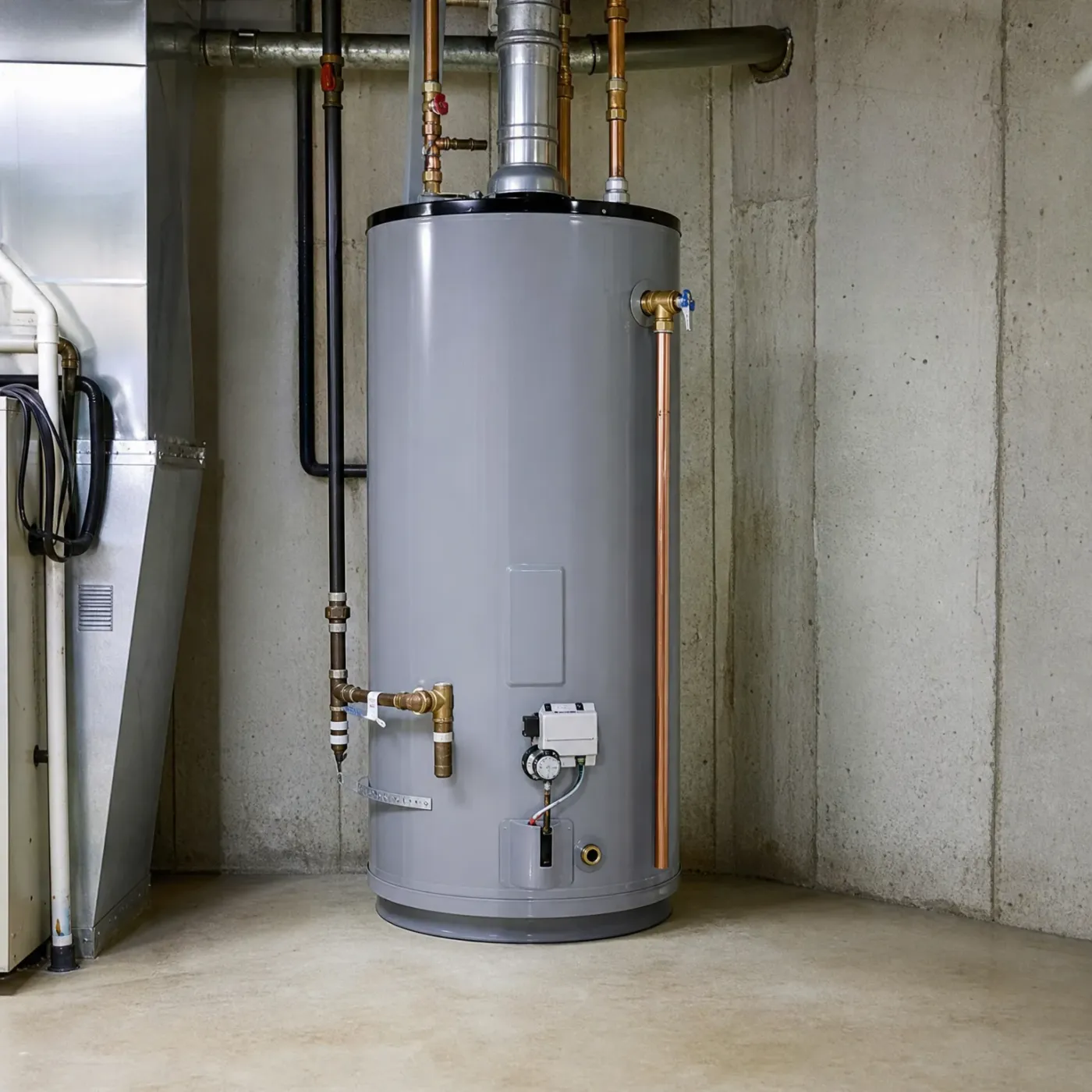
A large gray cylindrical gas water heater stands in a concrete-walled basement corner, connected to copper and black pipes and a metal flue, with ductwork at left.

A tank that's keeping up

Copper lines, solid fittings, a flue venting clear. The thermostat holds its setting and the water comes up hot when someone wants a shower. Nothing on this one needs attention yet, and that's the easiest time to think about what replaces it.

A gray cylindrical water heater with two access panels and copper piping stands in the corner of a concrete-walled basement next to exposed pink insulation.

A tank on its way out

Rust staining down the side and pooling at the base usually means the tank itself is failing, not just a part inside it. Once a water heater gets to this point, a reader keeping the house running for everyone in it is better off planning the swap than waiting on it.

58.6% of homes statewide heat with electricity

Most houses around you run on electric heat, which means your water heater is already competing with the furnace for the same electric bill all winter. A heat pump water heater uses a fraction of the power a standard electric tank does to heat the same water, so it's one less thing pulling hard on that circuit.

ACS 2020-2024 5-year B25040

A woman in a knitted shawl sits in a living room with a fireplace, shelves, a sofa with cushions, and a lamp by a bright window, looking off to the side.
A woman with long brown wavy hair in a green shirt over a white top stands in a living room with built-in white shelves, a ceiling fan, a potted plant and a sliding glass door.
A woman with shoulder-length gray-streaked hair in a light gray knit sweater stands smiling and looking off to the side in a living room with a sofa, houseplant, framed picture, and sunlit sliding glass door.
A woman with shoulder-length curly gray hair wearing a gray knit sweater stands near a window with a sheer curtain, looking to the side, with a blurred interior room behind her.

It's off your list after this

One installer gets your project, so there's no bidding war over it.

No fee to send it, and nothing to sign.

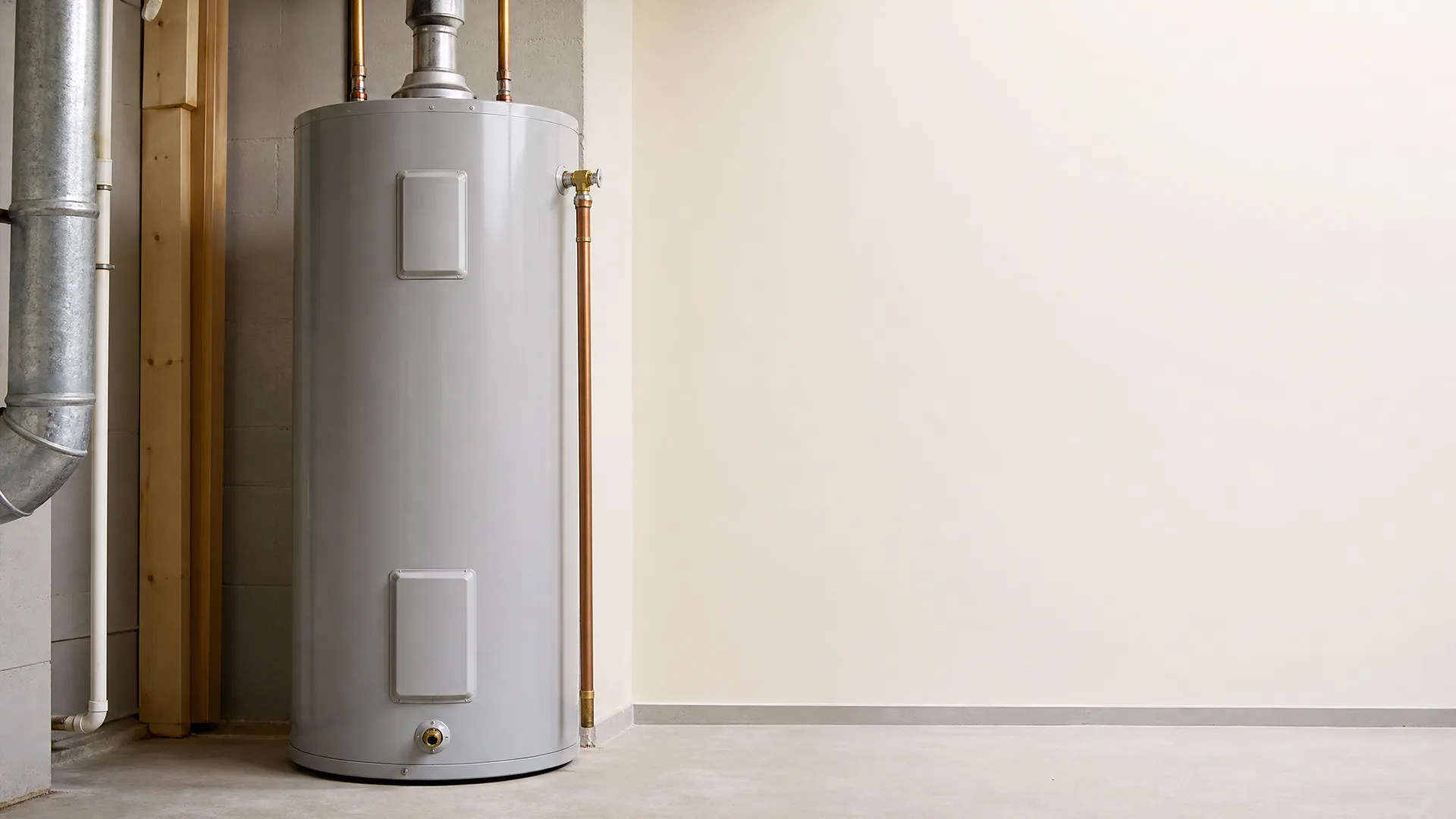
A gray cylindrical water heater with copper pipes stands in a basement corner beside a metal duct and wood framing, next to a plain beige wall and concrete floor.

Where the heat actually comes from

A heat pump water heater pulls warmth out of the room air and moves it into the tank instead of using resistance coils to make heat from scratch. That's why it runs on less power for the same gallon of hot water. The tradeoff is the room it sits in ends up a little cooler and a little drier, since that's where the heat came from. In a utility room or basement that barely gets used, you likely won't notice.

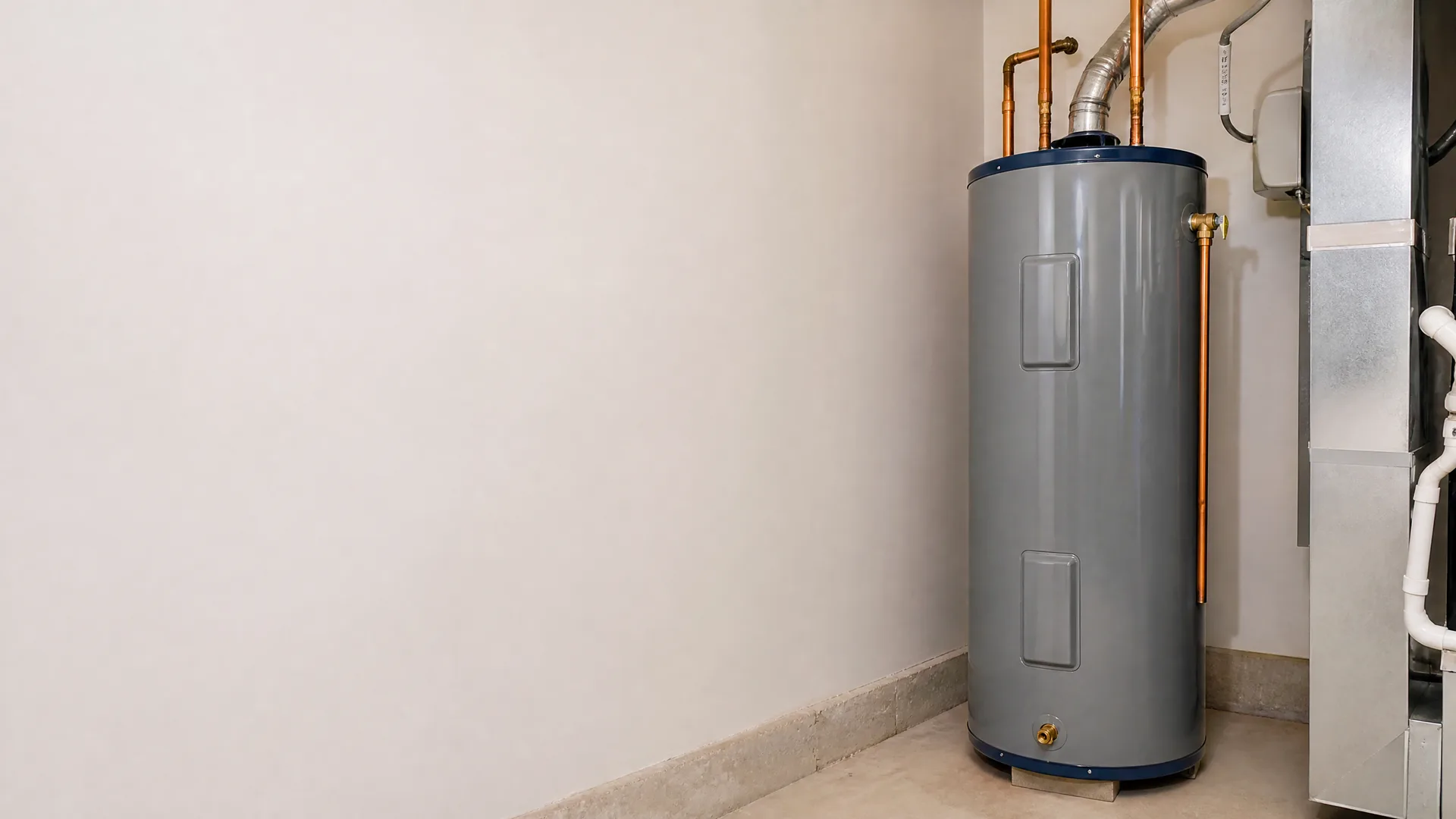
A gray cylindrical water heater with copper pipes stands in a corner of a basement utility room beside metal ductwork and white PVC piping.

What a cold air space tells you

The exhaust air coming off the unit runs colder than the room around it, often by a noticeable margin. That's the heat being pulled out for your water, not a sign anything's wrong. If you feel a steady draft of cool air near the tank, the heat pump is doing its job. Give it that 1,000 cubic feet or so to draw from and the temperature pulls back evenly, instead of chilling one corner of the room faster than it can recover.

Why is your water heater running up the electric bill?

You notice it most in January, when the furnace is already working hard and the water heater is pulling from the same panel. The breaker for it feels warm. The recovery between showers takes longer than it used to, or the tank runs for a long stretch to bring a full load back up to temperature. None of that means it's failing. A standard electric tank heats water by running current through resistance coils, and that draws a steady amount of power every time it cycles on. On a house already leaning on electric heat all winter, that adds up on the same bill as everything else.

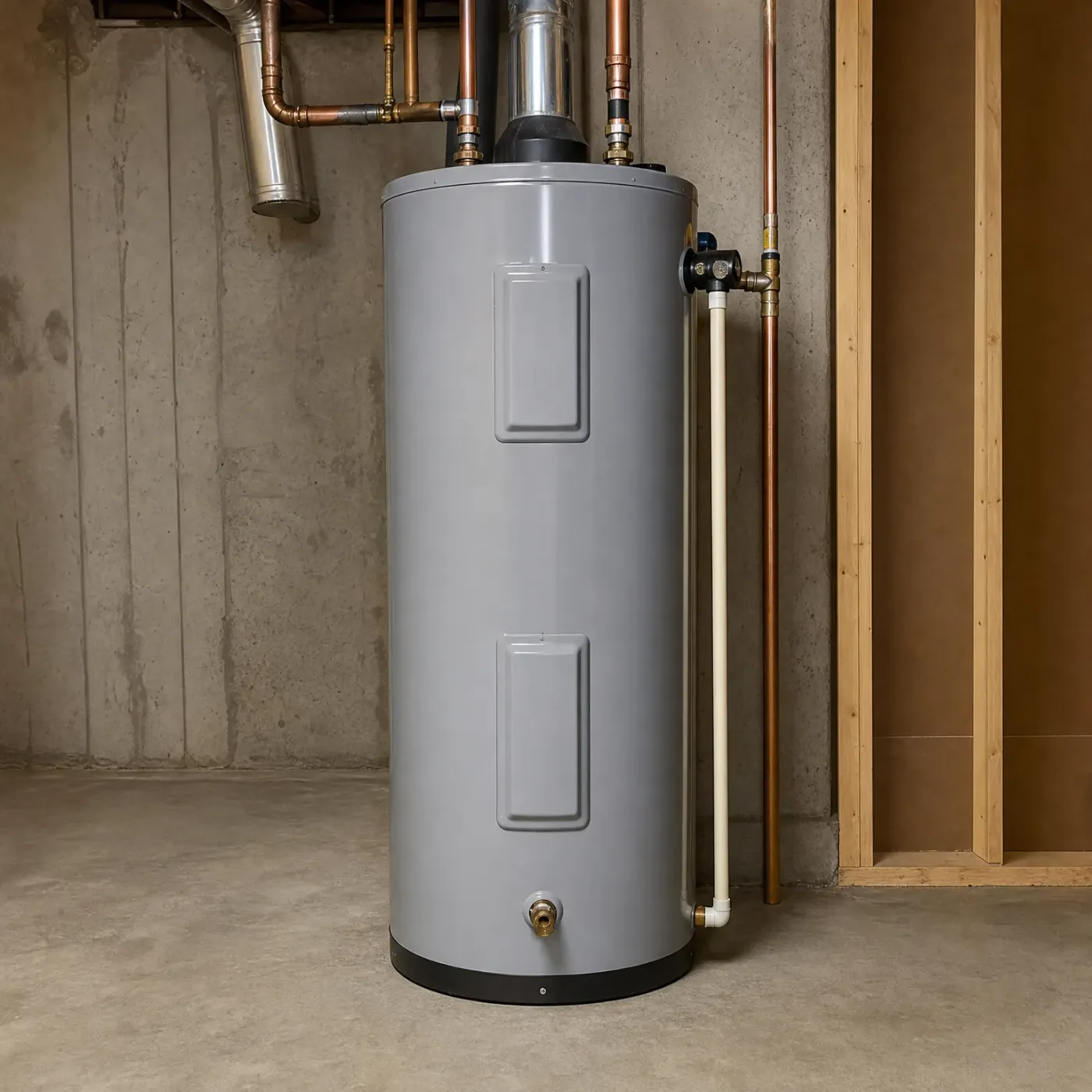
A gray cylindrical water heater stands against a concrete basement wall, connected to copper pipes and a metal flue overhead, with a white discharge pipe running down its right side and exposed wood framing to the right.
A tank like this is still heating water the straightforward way, with no sign yet of what's ahead.
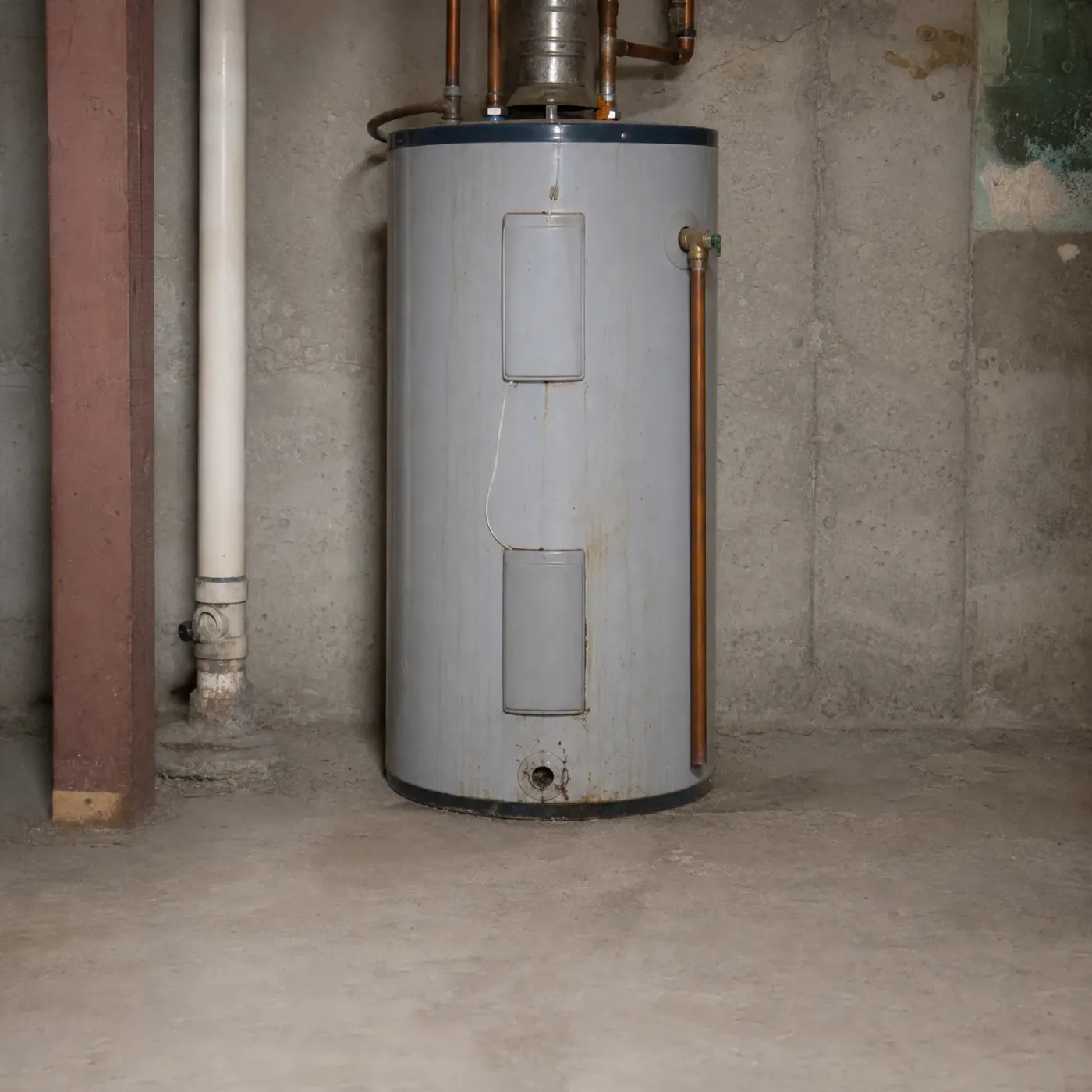
A gray cylindrical water heater with copper piping stands against a concrete basement wall beside a white vertical pipe and a wooden post.
Rust at the base like this usually means the tank is on borrowed time, and that's the moment to weigh a heat pump replacement.

Where this leaves you

  • A heat pump water heater costs less to run than a standard electric tank because it moves heat instead of making it.
  • In Washington, where electricity already carries the load for heat in most homes, that lower draw shows up on the bill year round.
  • Rust at the base or a longer recovery time between showers are signs a tank is closer to the end than the middle.
  • Space around the unit matters more than most people expect, since it needs room to draw air before it can work right.
  • A licensed local installer who works on these units every season knows which setup fits a given utility room and what usually goes wrong with it.
  • Sending one request means one contractor looking at your situation, not a stack of calls to sort through.

A heat pump water heater earns its keep in Washington because it moves heat out of the air instead of making it from scratch, and with electricity carrying the load for heat in most homes here, that difference shows up on the bill in every season, not just summer. Whether it makes sense for your house comes down to two things: what shape your current tank is in, and what kind of space it would be working in. Rust at the base, water pooling near the floor, or showers that take longer to recover all point to a tank nearing the end rather than settled in the middle of its life. And because these units pull air from the room to work, the utility room or basement around it needs enough open space to draw from, which isn't true of every closet or corner where a tank sits today. These are the kinds of details that matter on paper but play out differently in every house, which is where a local installer earns their place. Someone who works on these units every season in homes around you has already seen what fails first in a tight utility closet versus an open basement, and what setup actually fits the space you have. Send one request and it goes to one contractor, not a handful, so you're not stuck sorting through competing calls to figure out who actually knows your situation.

Sunlit corner of a room with a wooden sideboard holding a ceramic vase of olive branches and a dark wooden bowl, beside a white-framed window, a hardwood floor and woven rug.
A wooden cabinet holding a pale ceramic vase with leafy branches stands beside a beige wall in a sunlit room with hardwood floors, a jute rug, and a window showing green foliage outside.
Sunlit room corner with a beige upholstered sofa holding a rust-brown cushion, beside floor-length linen curtains at a window, over a wood floor with a woven rug.
Corner of a room with beige walls, a framed photograph, a floor-length linen curtain beside a window, an upholstered armchair with a knit pillow, white baseboards and trim, wood flooring and a pale rug.
Sunlit living room corner with a beige upholstered armchair with a cushion, linen curtains beside a wooden-framed window, green vertical panelled wall with a framed print, and a wooden table edge over a woven rug.

Stop chasing a water heater pro

Your request goes to one pro, not a list of companies.

Find a licensed pro

Sending the form costs nothing.