Gas or electric water heater for a Washington home
Send the form and the search for an installer is over.
Most homes in Washington heat with electricity, and power here is cheap, so the usual case for switching to gas doesn't carry the same weight it does elsewhere. That doesn't mean electric is automatically the right call for your house, or that gas is off the table if you already have a line to it. It depends on what you have now, what's hooked up in your home, and what you want out of the next water heater.
If your water heater is electric and working the way you expect, replacing it with another electric unit is usually the simpler path. No new gas line, no venting to plan around. If you're thinking about switching to gas, that's a bigger job, and it's worth having someone look at your setup before you decide anything.
This is where a local contractor earns their keep. Someone who installs water heaters in Washington homes all year sees what actually fails, what gas lines already run where, and what a switch really involves in a house like yours. That's a different conversation than a general rule about gas versus electric.
Send the request and you're done deciding who to call. One licensed, local contractor gets your information, not a handful of companies bidding for your attention. They'll look at your situation, electric or gas, replacement or switch, and tell you what makes sense for your home specifically.
You don't have to figure out the right answer before you ask. That's the part you're handing off.
Should I get a gas or electric water heater in Washington?
You want a straight answer before an installer shows up. Gas and electric both heat water fine, but the right pick depends on what's already running to your house and what you pay for power. In Washington, the usual reasons people switch to gas don't carry the same weight, since electricity here is cheap and most homes already run on it.
Electric is the right call for most homes here
Electric water heaters cost less to run almost everywhere else in the country, since gas is usually the cheaper fuel. Washington flips that. Power here is priced low enough that the savings gas usually offers mostly disappear. If your home already has electric service sized for the water heater, which most do, there's no wiring or gas line to add, and an electric unit goes in without touching the rest of the house. Gas still makes sense if your home already has a gas line run to the water heater, or if you want recovery that doesn't depend on electric service during an outage. For most homes here, electric does the job without the extra cost of bringing gas in new.
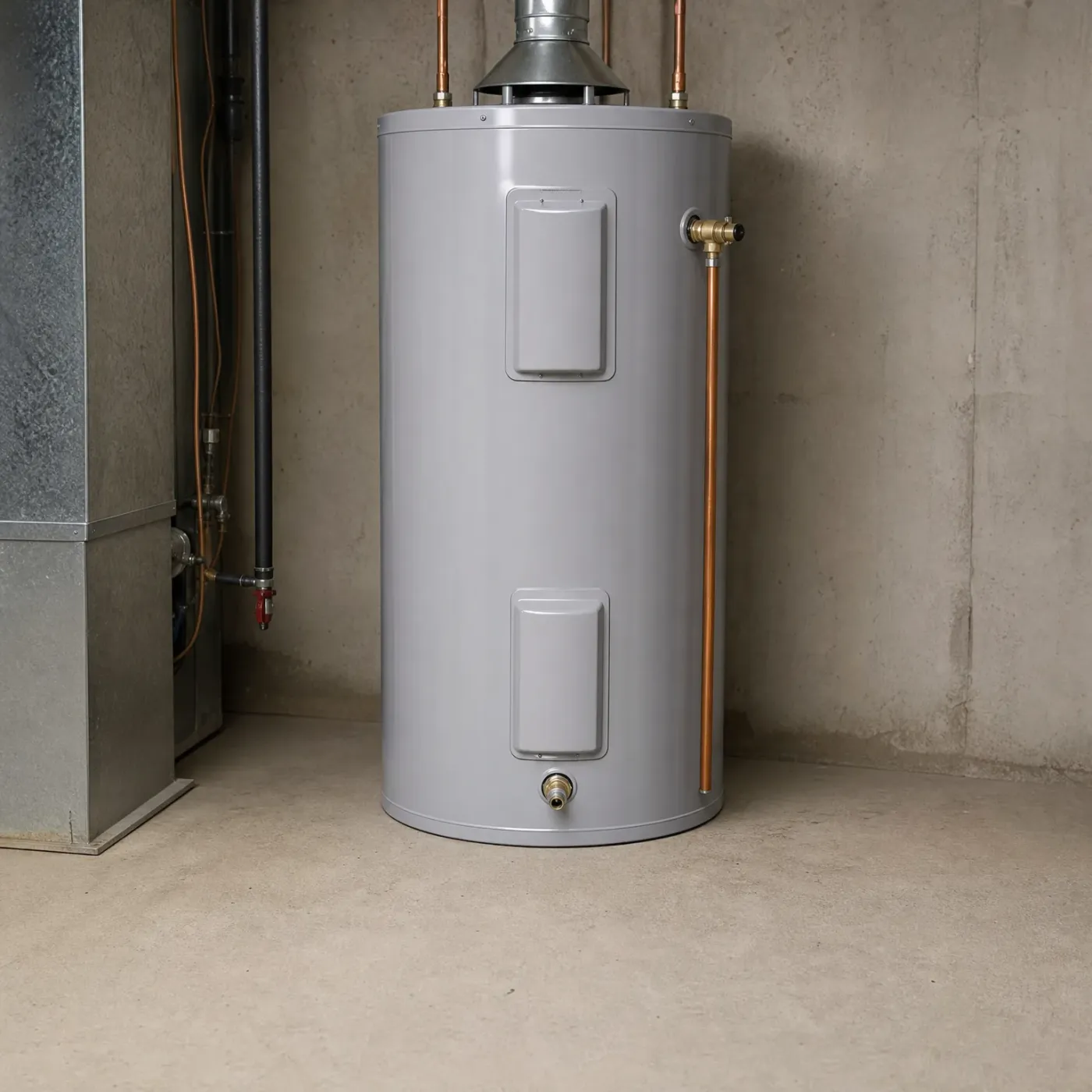
Electric, working right
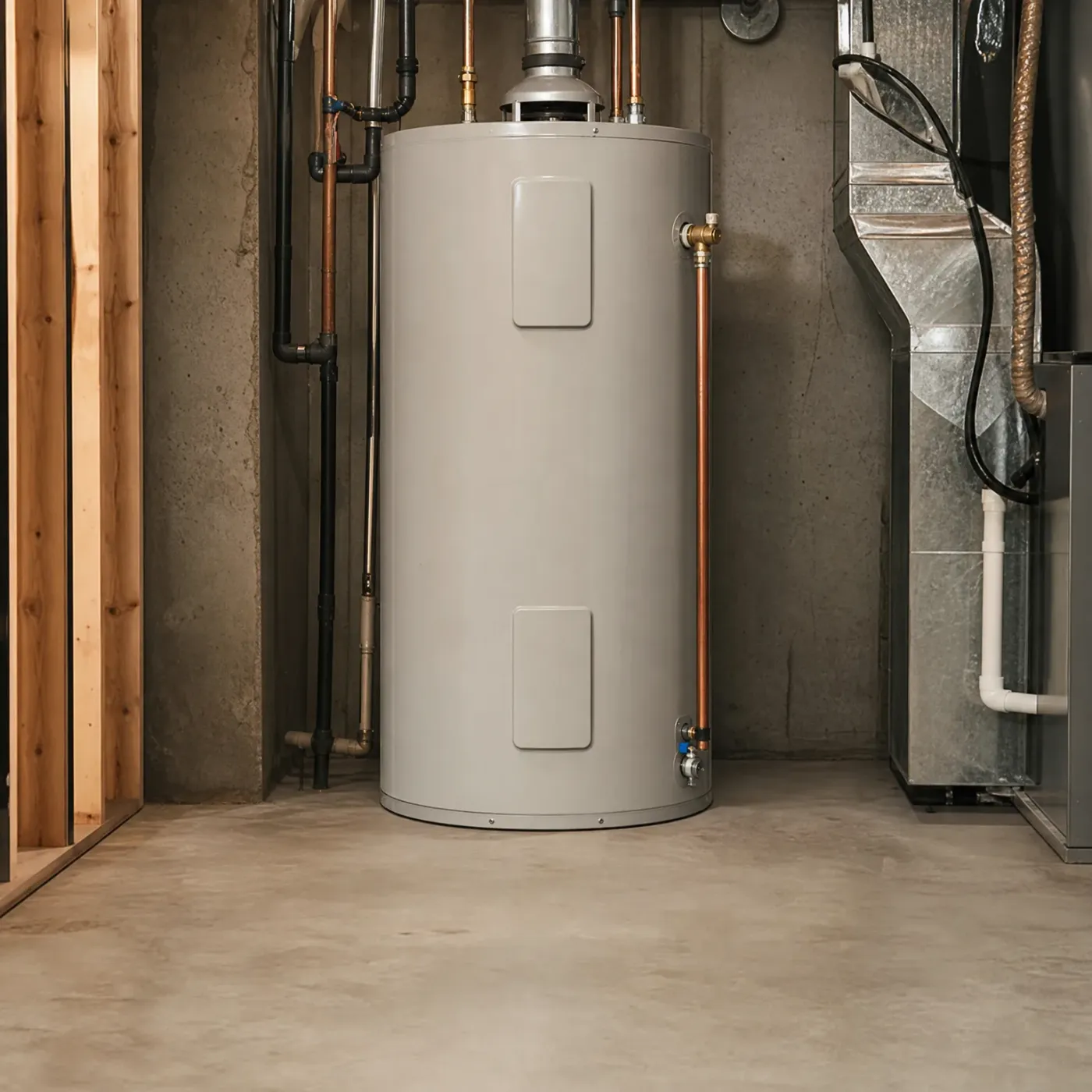
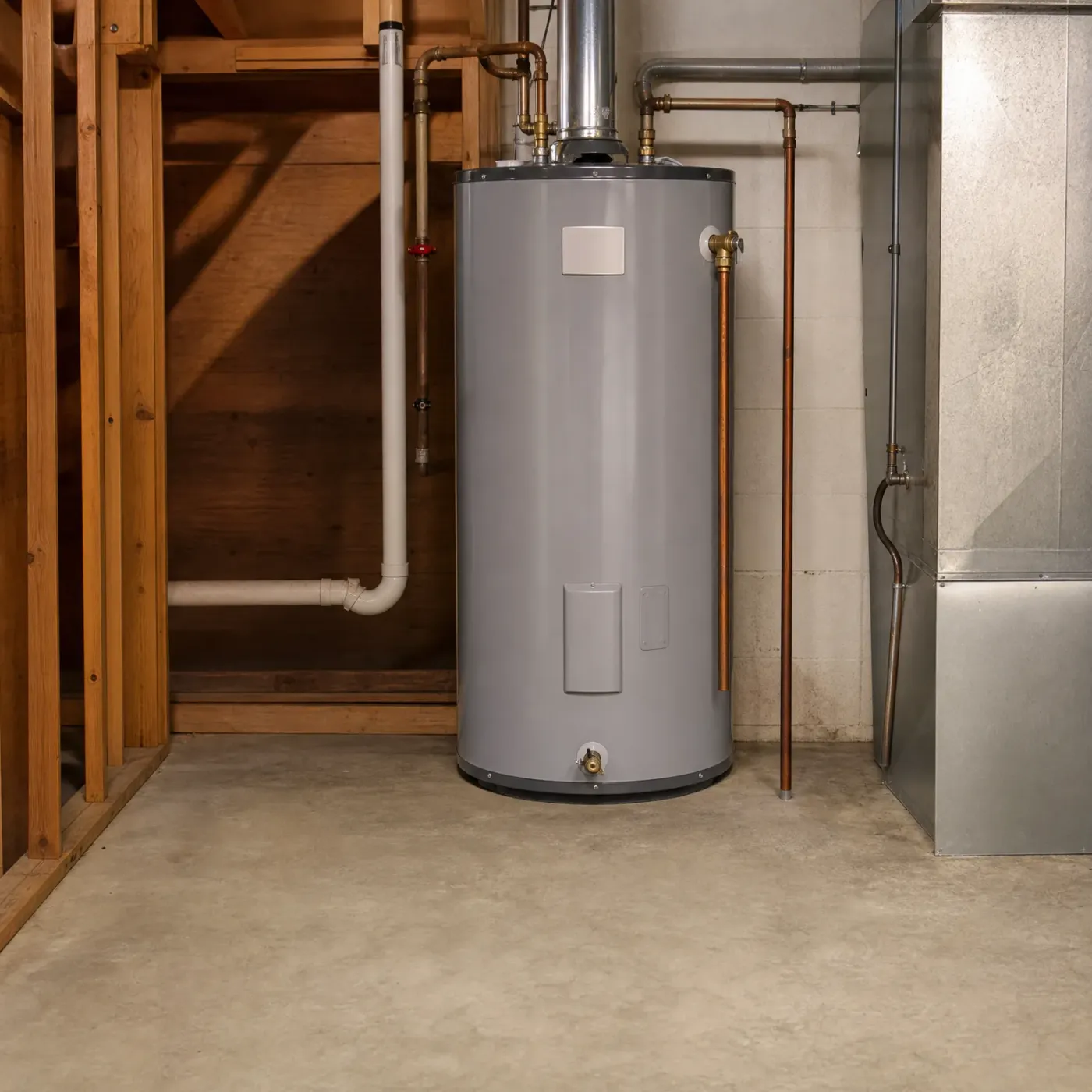
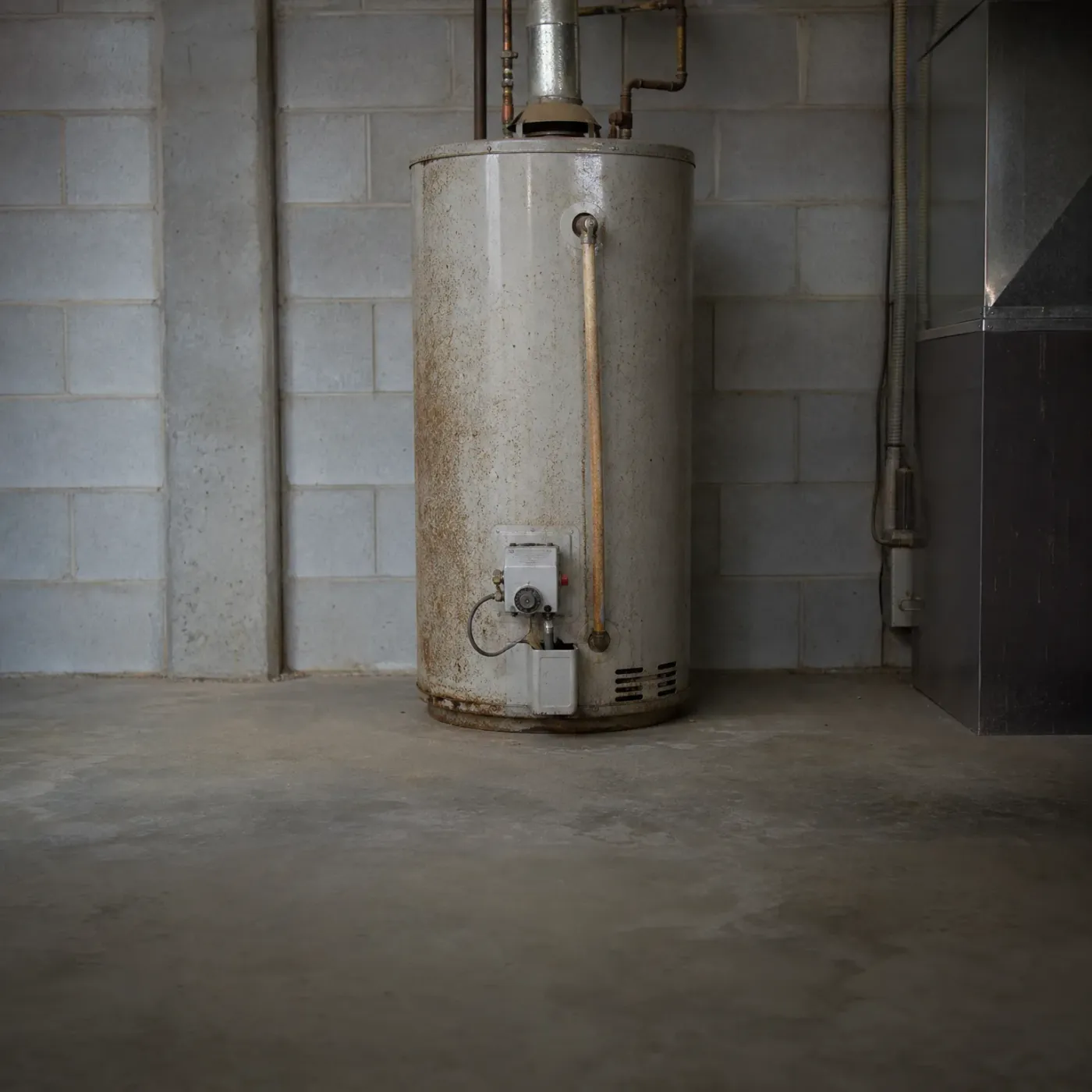
This is what a sound electric water heater looks like: copper lines run clean to the tank, the pressure-relief valve sits ready, and the furnace nearby handles its own job. Nothing here needs gas piping run to it. With cheap power in Washington, a setup like this can run for years without costing much to keep.
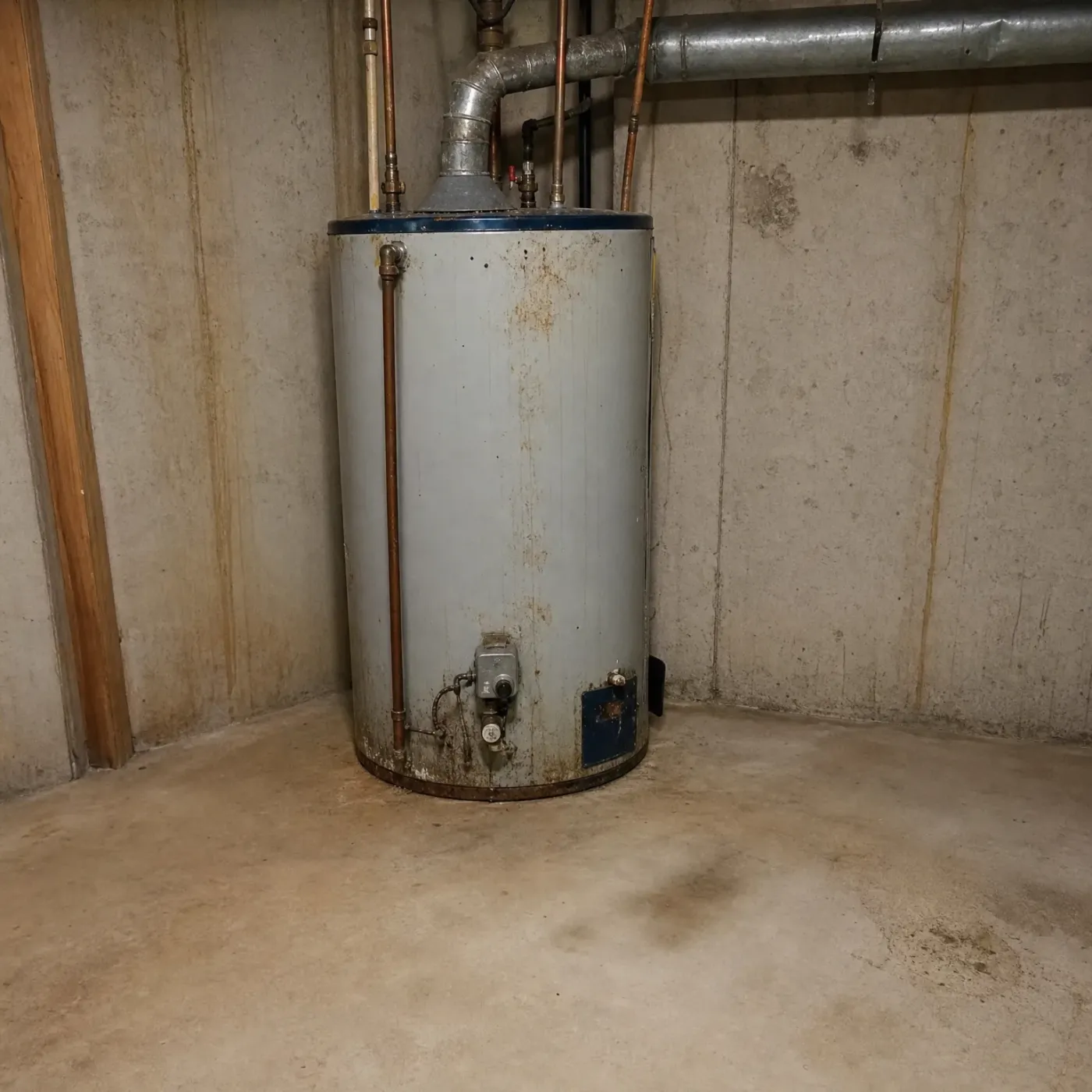
Old tank, past its time
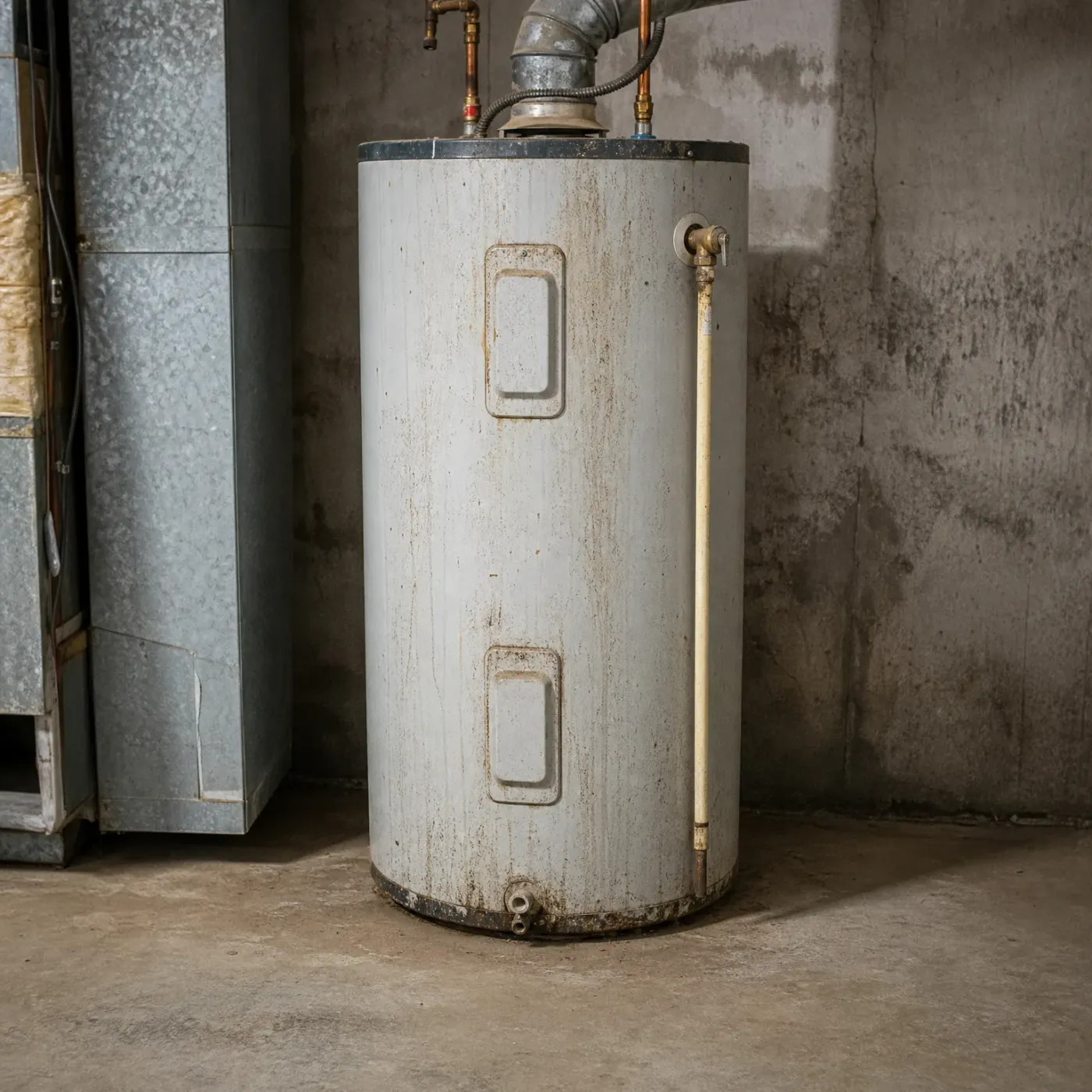
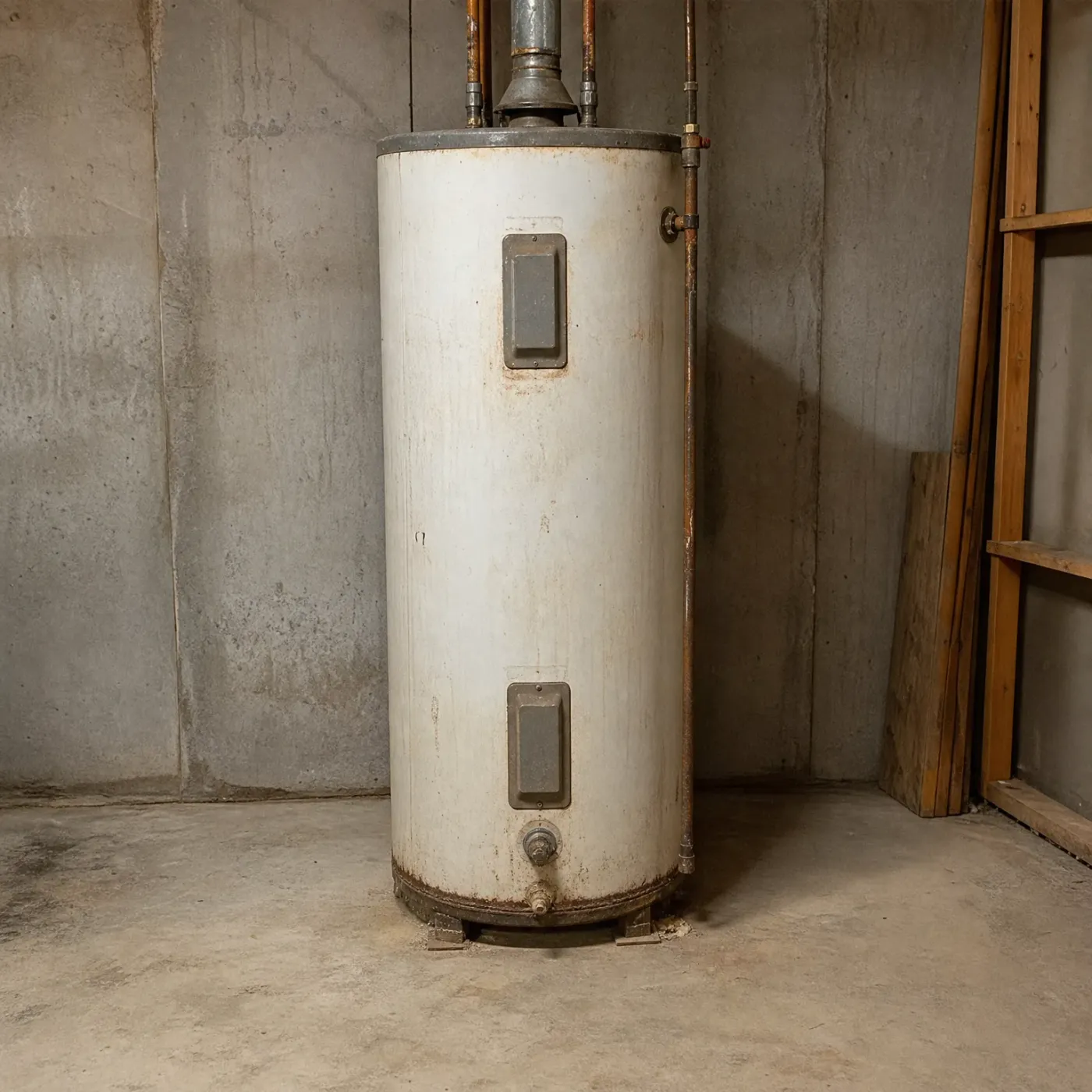
Rust like this on the tank shell tells you the water heater is near the end, not whether gas or electric was ever the issue. Galvanized fittings mixed with copper at the top are another sign of age. Whatever replaces it, an installer should check these connections before setting the new unit.
Is your water heater actually telling you something?
If you've got electric, listen for a low hum when it's heating, and check how fast the hot water runs out when two people shower back to back. A tank that takes longer than it used to, or water that goes lukewarm sooner, usually means the element is wearing down. If you've got gas, a yellow or flickering flame instead of a steady blue one is worth paying attention to, and so is any smell near the unit. That smell isn't something to wait on. Either type, water pooling at the base means the tank itself is failing, and that's not a repair, it's a replacement.
1
Old tank gets drained and disconnected from water lines
2
Gas line or electrical circuit is capped or verified safe
3
New tank sets in place and gets leveled
4
Water lines connect, then gas or power hooks up
Send one request and you're done looking
Your request goes to one pro, not a list of companies.
Send the request and finding a pro stops being your problem.
Installation doesn't need gas piping run to the unit, so there's less to inspect and connect before the tank goes in.
With power priced the way it is here, the usual savings pitch for gas doesn't apply the same way it would elsewhere.
Recovery time runs slower than gas, so a household that showers back to back may notice the gap more.
If your home already has a 240-volt circuit sized for the tank, swapping it out is a simpler job than adding a fuel line would be.
Electric tanks don't need venting for combustion, which gives an installer more flexibility on where it can sit.
Gas
Heats water faster than electric, so recovery between uses is quicker if several people need hot water close together.
Needs a gas line already run to the water heater's location, or one added, before installation can happen.
Requires venting for exhaust, which has to be checked or installed correctly alongside the tank itself.
Keeps working during a power outage as long as it has a pilot or battery ignition, since it isn't drawing on your electric panel to heat.
With electricity cheap in Washington, the fuel cost gap between gas and electric here is smaller than it is in places paying more for power.
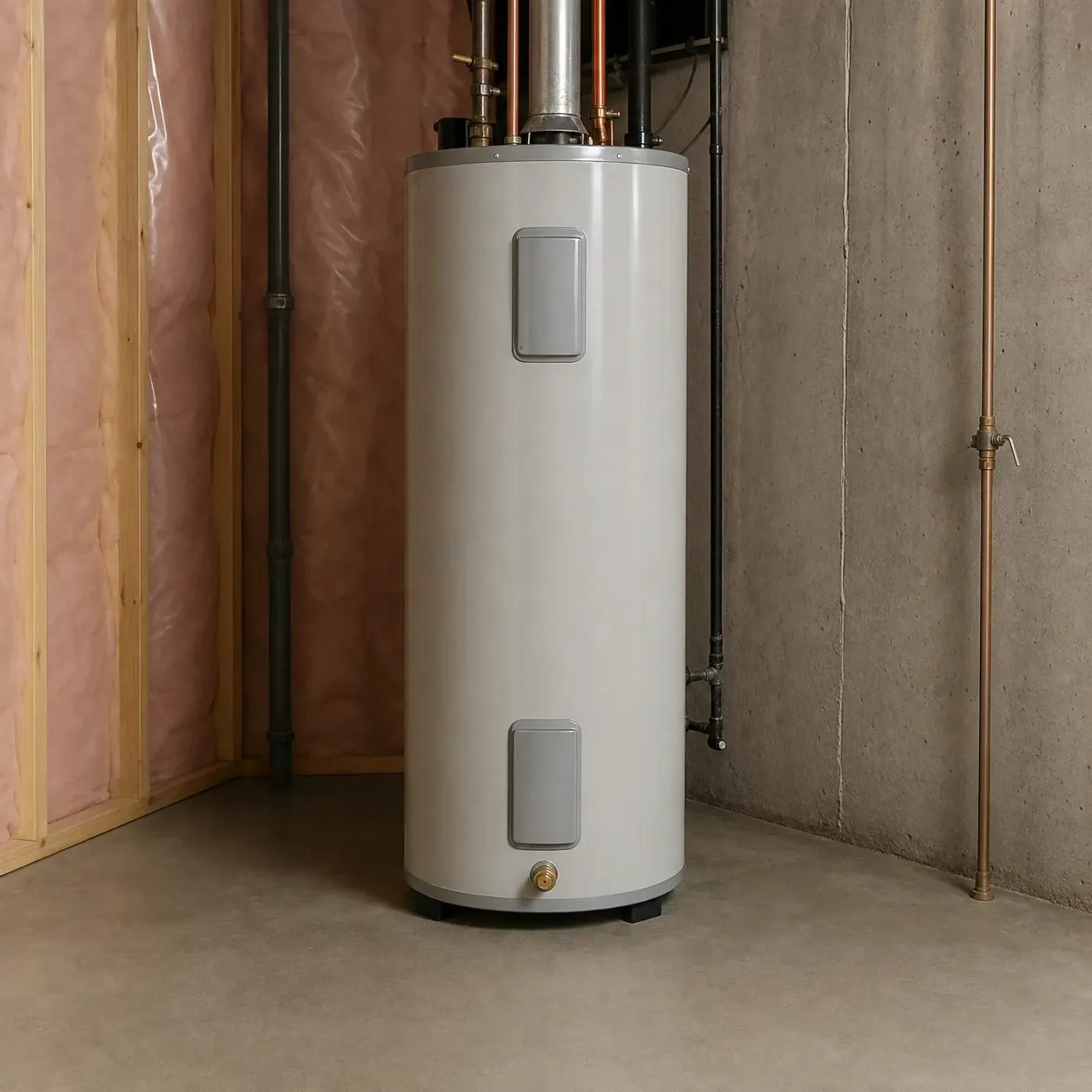
Tank in good shape
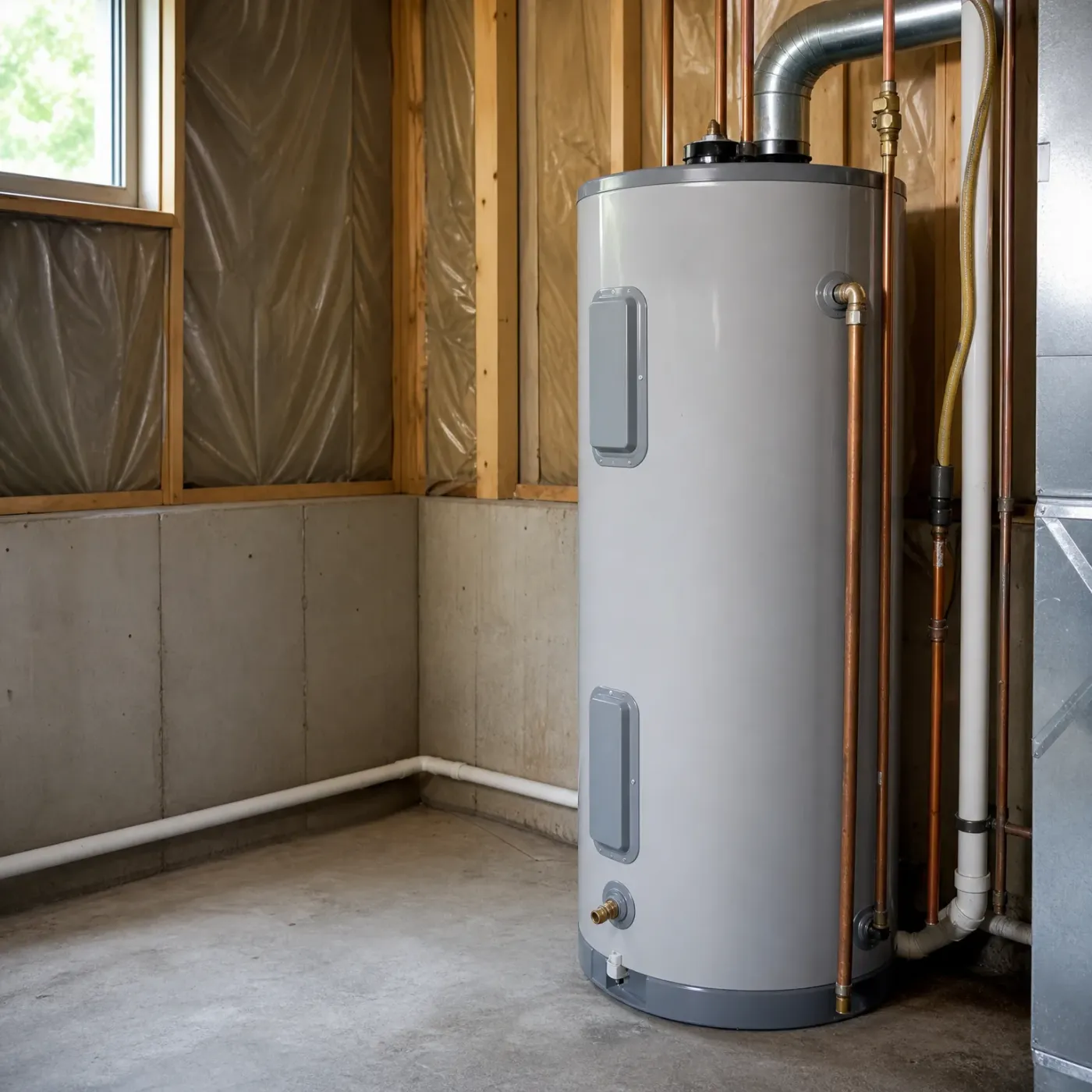
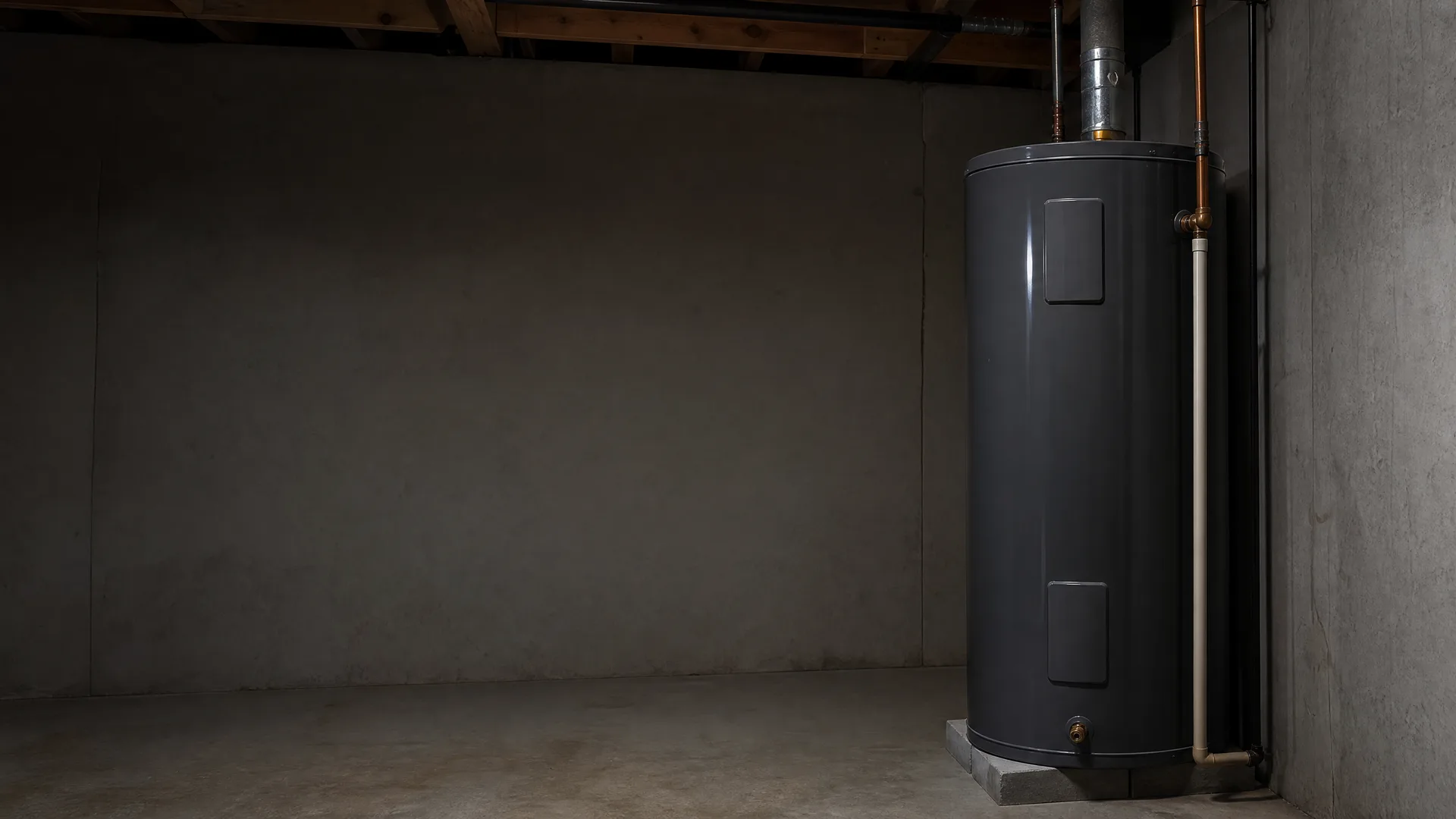
This tank still looks the way it did going in. No rust on the jacket, the copper lines run clean overhead, and the floor underneath is dry. An installer who sees this gets to focus on the swap itself instead of cleanup from a tank that failed slowly.
Tank on its way out
Rust like this on the shell and around the thermostat panels usually means the tank has been failing for a while, not just today. Once corrosion gets to the steel, a water heater doesn't get repaired back to reliable. At this point you're choosing the replacement, not whether one happens.
Before you get your water heater installationAfter you get your water heater installation
An electric tank recovers slower than gas because the elements can only push so much heat into the water at once. A gas burner heats faster, but it needs venting and a gas line already run to where the tank sits.
If your house already has gas piped to the water heater, keeping gas usually means less work at install. If it doesn't, running new gas line for one appliance is a bigger job than setting an electric tank on the lines already there.
This tank is doing what it should. Clean copper lines, a dry floor, insulation intact behind the panel.
Rust working down the jacket like this usually means the tank is leaking or close to it, not just old.
58.6% of homes statewide heat with electricity
Most houses in Washington already run on electric heat, so odds are good your panel has what it takes for an electric tank without any new wiring. If yours is the exception and gas is already piped to where the tank sits, that changes what an installer needs to check first.
ACS 2020-2024 5-year B25040
For most homes in Washington, electric is the straightforward choice, and if gas is already piped to where your tank sits, that's worth weighing too. Either way, the install matters more than the fuel type: the tank leveled right, the lines connected clean, the gas or power checked before the water heater gets switched on. An installer who works on these year-round in this area has seen what tends to go wrong, whether that's a tank that was never vented right or wiring that wasn't sized for the job. When you send the request, you're matched with one licensed installer local to you, not a handful of companies competing for your callback. That's someone who knows this equipment and this area, not a dispatcher working down a list. You've got the answer for your house. What's left is getting someone qualified to do the work.
Finding a pro stops being your job
One installer gets your project, so there's no bidding war over it.